Broth Configuration
Select extraction method, cut & volume
1 cup
Chicken Carcass & Joints (Whole Bird Frame)
Gentle trembling wobble when refrigerated. Visibly thicker than standard broth with noticeable collagen mouthfeel.
Clinical Note — The Tryptophan Deficit: Gelatin and collagen contain 0% tryptophan (PDCAAS score = 0). While bone broth provides exceptional connective tissue and intestinal support, it should not be relied upon as a sole dietary protein for muscle protein synthesis.
Anatomical Bone Source & Extraction Chemistry
Not all bones yield the same nutrition. Collagen yield, mineral profile, and gelatin density are directly governed by the anatomical architecture of the animal joints selected.
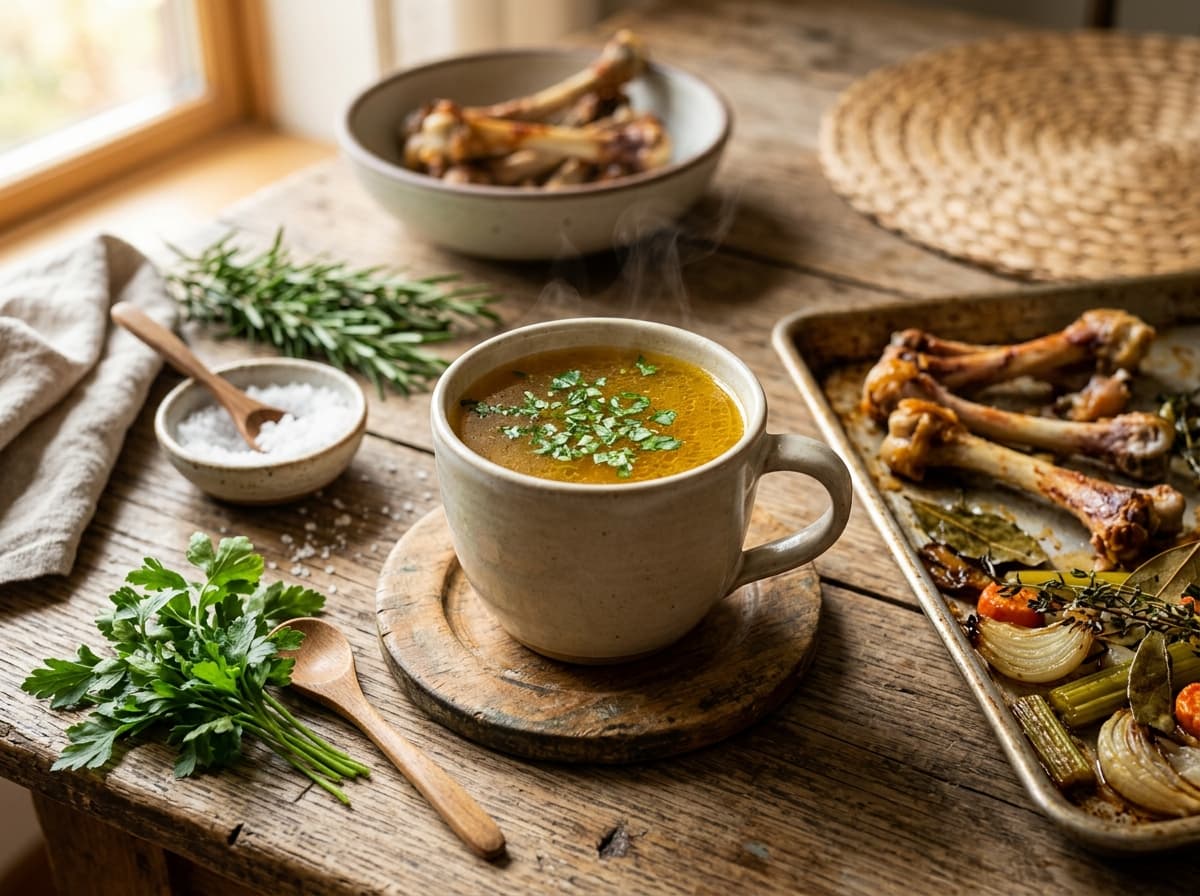
1. Chicken Carcass & Joints (Whole Bird Frame)
9.2g Protein • Type II Cartilage CollagenThe traditional foundation of poultry bone broth utilizes roasted frames, backs, necks, and sternums. This architectural mixture combines spongy cancellous bone with high-density articular cartilage. Poultry joint cartilage is predominantly rich in Type II collagen, which specifically mirrors human synovial joint structures.
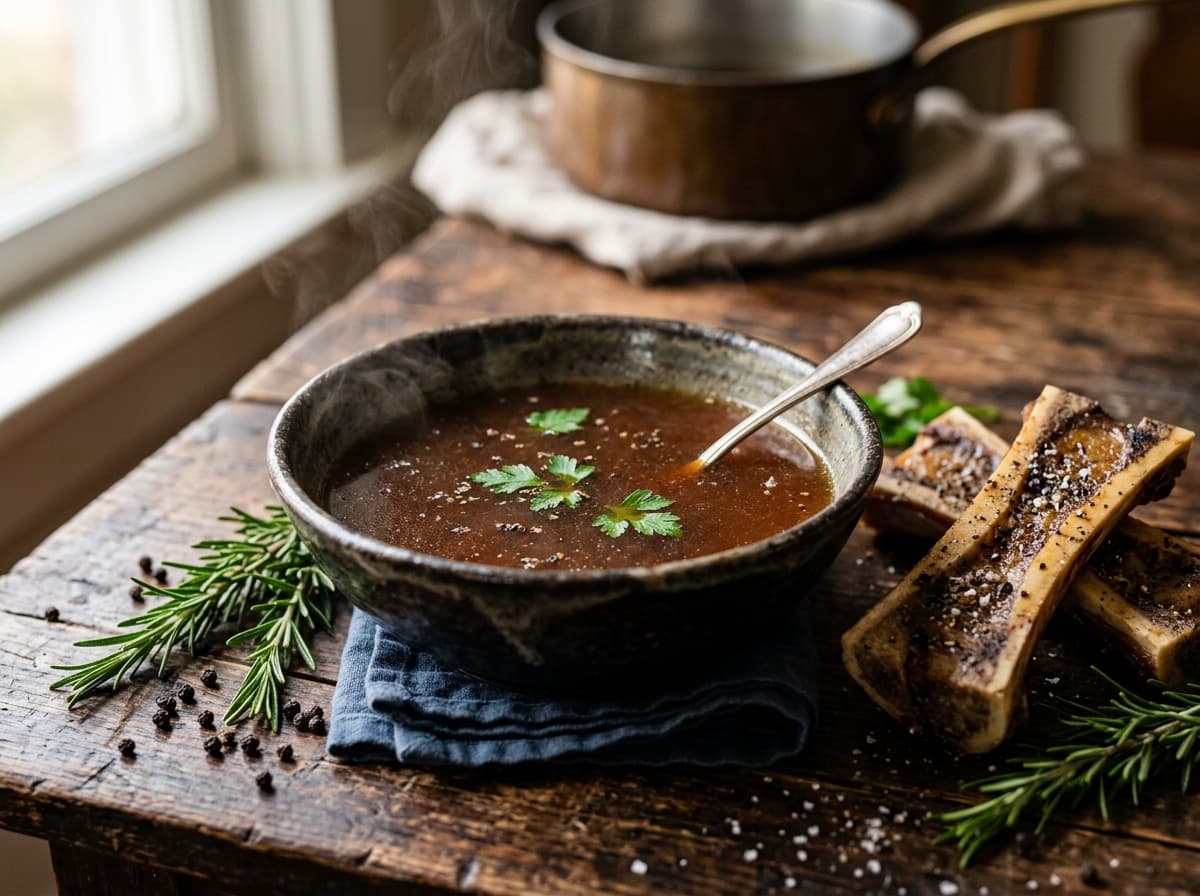
2. Roasted Beef Marrow & Joint Knuckles
10.5g Protein • Type I & III Dense PeptidesBovine bone broth requires roasted femur marrow shafts paired with dense spherical knuckle joints. Roasting at 400°F (204°C) triggers non-enzymatic Maillard browning, transforming reducing sugars and amino acids into deep savory pyrazines. Bovine bones are abundant in Type I and Type III collagen, which provide structural tensile strength to skin dermis, vascular walls, and tendon attachments.
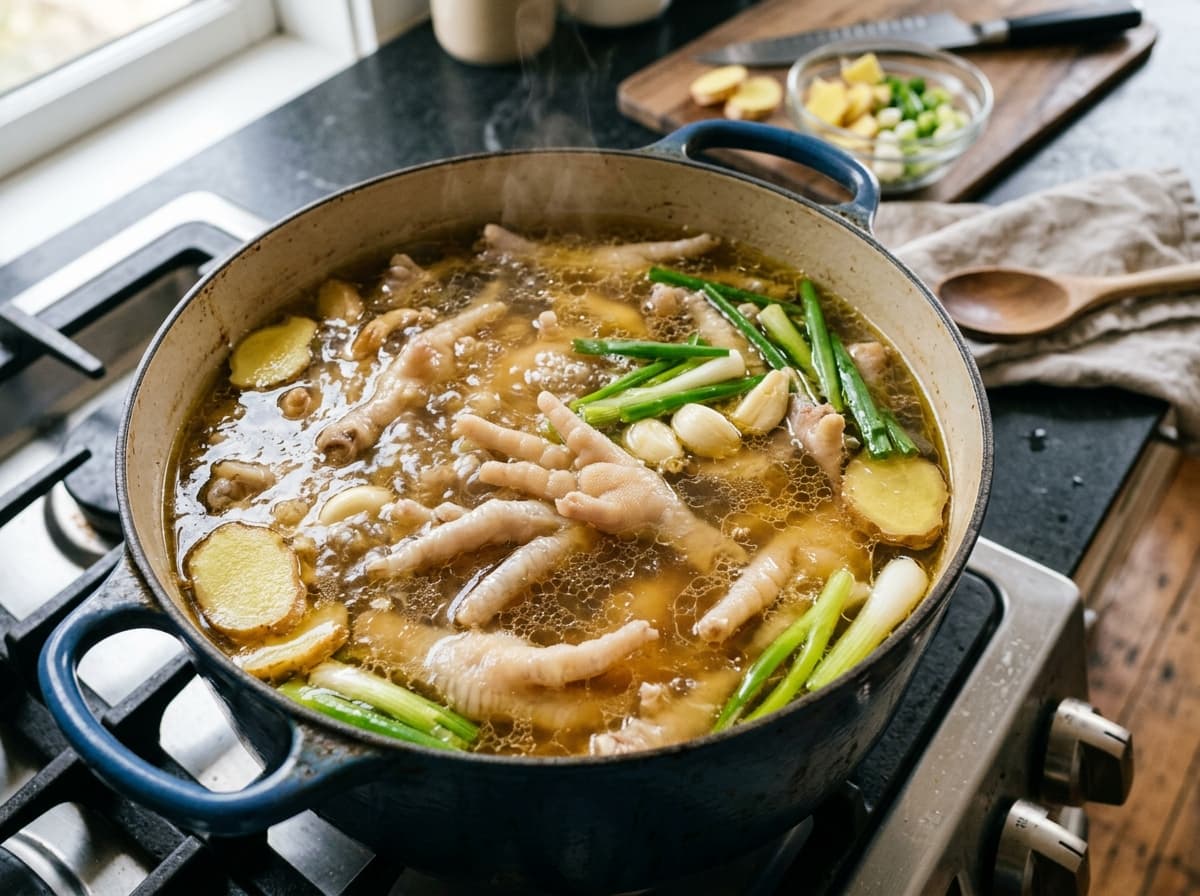
3. Chicken Feet (Paws) & Wingtips: The Ultra-Collagen Bomb
14.5g Protein • Maximum Gelatin DensityProfessional culinary chefs and therapeutic nutritionists consider chicken paws the undisputed gold standard for gelatin extraction. Paws are composed almost entirely of epidermal skin, digital flexor tendons, and dozens of tiny synovial joint caps. Simmering chicken feet extracts up to 14.5g of pure protein per cup with zero carbohydrates, creating a naturally dense gelatin block that can be cut with a knife when chilled.
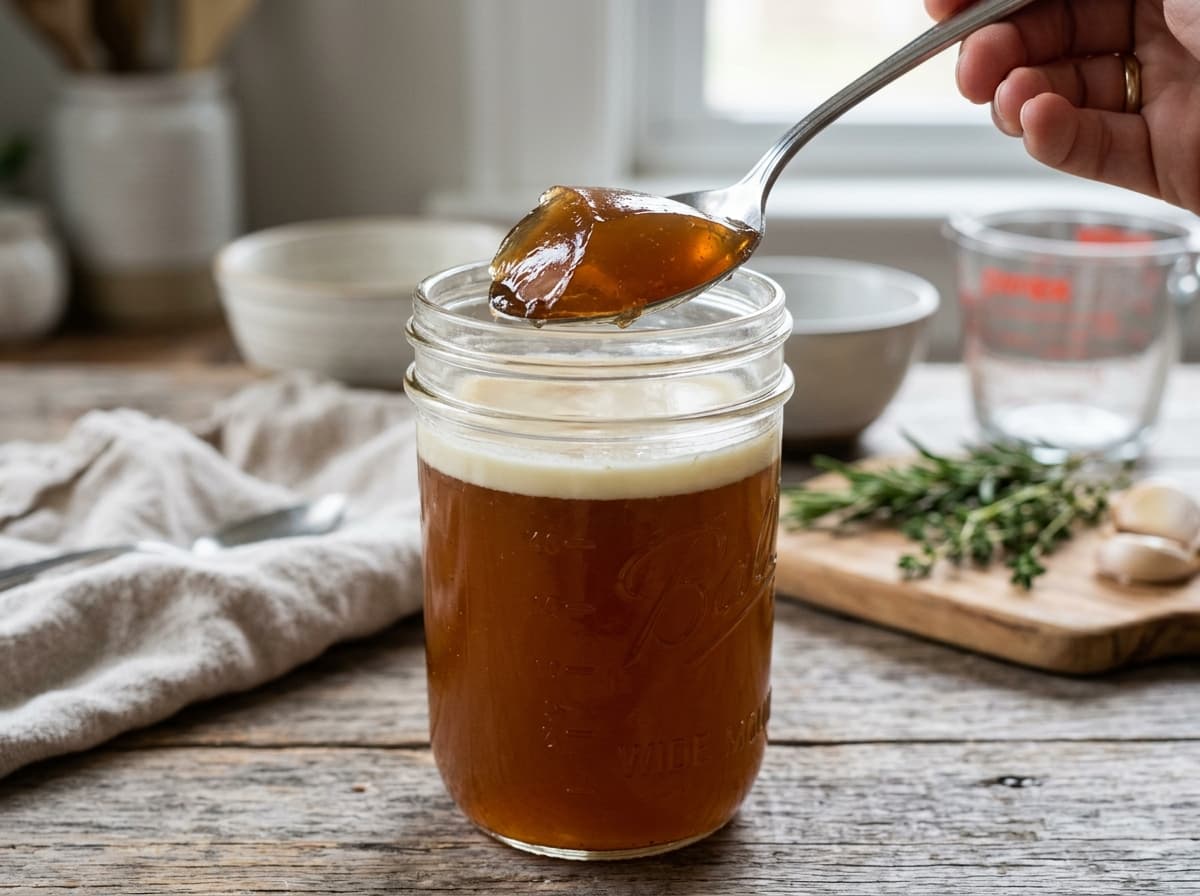
4. The Chilled Gelatin "Jello" Wobble Test
Quality Diagnostic • 100% Visual VerificationThe ultimate diagnostic test for real bone broth is the refrigerator gelation check. When refrigerated below 40°F (4°C) for 6 to 8 hours, genuine bone broth solidifies into a gelatinous savory "wobble". A distinct, clean white disk forms at the top (the fat cap/tallow layer), which seals the amber gelatin underneath from oxygen exposure, extending chilled shelf life up to 7 days.
Extraction Kinetics: How Simmer Time Multiplies Protein
Thermal denaturation rates across stovetop, pressure cooker, and slow cooker methods
Collagen consists of three polypeptide chains wound into a tight triple helix held together by hydrogen bonds and covalent cross-links. Breaking these bonds requires either prolonged moderate heat (180°F–200°F) or rapid high-pressure thermal processing (15 psi / 250°F).
| Method & Duration | Temperature | Protein / Cup | Chilled Consistency | Primary Benefit |
|---|---|---|---|---|
| Instant Pot (2 – 3 hrs) | 250°F (15 psi) | 6.8 – 7.5g | Delicate Tremble | Zero evaporation, 85% time savings |
| Standard Simmer (12 – 16 hrs) | 185°F – 195°F | 9.0 – 10.2g | Soft Panna Cotta | Pristine clarity, smooth mouthfeel |
| Deep Extraction (24 hrs) | 180°F – 190°F | 11.5 – 12.8g | Firm Jello Wobble | Maximum synovial membrane breakdown |
| Extended Simmer (36 – 48 hrs) | 180°F Low | 13.5 – 15.0g | Dense Rubber Gel | Dense cortical bovine bone dissolution |
The Amino Acid Spectrum: Why Glycine & Glutamine Matter
Biochemical mechanisms behind gut mucosa, sleep regulation, and joint restoration
While modern dietary muscle meats (chicken breast, steak) are rich in methionine and branched-chain amino acids (BCAAs), they are deficient in glycine and proline. Bone broth provides the natural evolutionary counterbalance:
Glycine (~2,000 mg / cup)
Every third amino acid in the collagen triple helix is glycine (Gly-X-Y sequence). Glycine acts as an inhibitory neurotransmitter in the central nervous system, improving deep REM sleep and sleep latency when consumed before bed. It is also the rate-limiting precursor for glutathione synthesis, the human body's master intracellular antioxidant.
Proline & Hydroxyproline (~2,200 mg / cup)
Hydroxyproline is unique almost exclusively to collagen. It forms tight hydrogen bonds that stabilize the fibrous structure of human skin, cartilage, and connective tissues. Clinical trials show that orally ingested collagen hydrolysates significantly increase dermal elasticity and hydration.
Glutamine (~750 mg / cup)
Glutamine serves as the primary metabolic fuel substrate for rapidly dividing enterocytes (the cells lining the small and large intestines). It promotes the expression of claudin and occludin proteins, strengthening tight junctions and attenuating intestinal hyperpermeability ("leaky gut").
Arginine (~700 mg / cup)
A conditionally essential amino acid critical for nitric oxide production, endothelial vasodilation, cellular replication, and immune system lymphocyte activation during wound healing and metabolic stress.
The Tryptophan Deficit: Why Bone Broth Is an "Incomplete" Protein
A common nutritional myth is that 10g of bone broth protein is equivalent to 10g of chicken breast or whey protein for bodybuilding. In reality:
• Zero Tryptophan: Collagen lacks tryptophan completely. Its Protein Digestibility-Corrected Amino Acid Score (PDCAAS) is 0.0 when consumed as an isolated protein.
• Muscle Protein Synthesis (MPS): Without all 9 essential amino acids, bone broth cannot independently trigger maximal skeletal muscle protein synthesis.
• The Ideal Synergy: Bone broth is not intended to replace whole food proteins; it is intended to balance them. Standard muscle meats provide tryptophan and methionine, while bone broth supplies the glycine, proline, and glutamine required for ligament repair and gut barrier integrity.
Broth vs. Stock vs. Bone Broth vs. Bouillon: The Definitive Matrix
Side-by-side comparison per standard 1 cup (240 ml / 8 fl oz) serving
| Product Category | Primary Ingredients | Simmer Time | Protein | Calories | Sodium |
|---|---|---|---|---|---|
| Bone Broth (Chicken or Beef) | Bones, connective joints, ACV | 12 – 24+ hrs | 9.0 – 14.5g | 40 – 56 kcal | 310 – 450 mg |
| Traditional Meat Stock | Meaty bones, mirepoix, herbs | 3 – 6 hrs | 4.0 – 6.0g | 25 – 35 kcal | 400 – 600 mg |
| Standard Chicken Broth | Chicken meat, water, salt | 1 – 2 hrs | 1.0 – 2.0g | 10 – 15 kcal | 860 mg |
| Bouillon Cubes / Base | Salt, MSG, palm oil, yeast extract | Instant | <1.0g | 10 – 15 kcal | 900 – 1,100 mg |
Acid Extraction Science: Does Apple Cider Vinegar Actually Help?
Many recipes prescribe adding 1 to 2 tablespoons of raw apple cider vinegar (ACV) to the cold stockpot before heating. What does the chemistry say?
pH Titration
Acetic acid drops water pH from neutral ~7.0 down to 5.0–5.5, creating a mildly acidic environment that promotes the breakdown of calcium phosphate.
+18% Collagen Yield
Mild acidity accelerates the thermal cleavage of covalent intermolecular bonds binding the tropocollagen helices, speeding up gelatin conversion.
Mineral Demineralization
Solubilizes 20–25% more calcium, magnesium, and phosphorus into solution from bone hydroxyapatite compared to plain tap water.
Fasting, Ketosis & Gut Health Protocols
Bone broth has become the premier staple for intermittent fasting (16:8, OMAD) and gut-rest healing protocols:
Ketogenic & Carnivore Adaptation
When transitioning into nutritional ketosis, the kidneys excrete sodium rapidly as circulating insulin drops. Sipping 2 cups of salted bone broth provides 700–800mg sodium and 500mg potassium, eliminating "keto flu" headaches, muscle cramping, and postural hypotension.
Histamine & FODMAP Sensitivity Considerations
Individuals diagnosed with Mast Cell Activation Syndrome (MCAS) or histamine intolerance may experience flushing or headaches from 24-hour broths due to natural biogenic amine accumulation. For these individuals, a 2-hour Instant Pot pressure cook provides high gelatin with minimal histamine buildup. Omit garlic and onions for a low-FODMAP protocol.
Frequently Asked Questions
Everything you need to know about bone broth nutrition, storage, and health benefits