Air Fryer Chicken Nutrition & Time Calculator
Select cut, coating type, and portion to calculate exact calories, protein density, oil absorption, and optimal air fryer convection settings.
Pat fillets bone-dry with paper towels before seasoning; surface moisture slows browning. Pull at 160°F and rest 5 minutes — carryover brings the core to ~165°F.
The High-Velocity Boundary Layer Evaporation Law
An air fryer is essentially a high-intensity countertop convection oven. A powerful top heating element coupled with an overhead radial fan forces superheated air at 40 to 60 MPH across the meat surface. In traditional stagnant ovens, a humid micro-climate (boundary layer) clings to chicken skin, delaying evaporation. The air fryer violently strips this boundary layer, forcing rapid moisture evaporation in the outer 1mm while sealing intramuscular juices, triggering the Maillard reaction in under 12 minutes with zero submerged oil.
How Air Fryers Change What You Log Per 100g
Air frying combines forced convection, surface dehydration, and optional light oil misting. These four mechanisms explain why logged calories differ from deep frying — without changing total protein grams in the piece.
High-velocity convection browns without oil immersion. Compared to FDC 171475 fried breaded breast, air-fry planning estimates save ~92 kcal and ~9g fat per 100g serving.
High air speed strips the surface humidity boundary layer, triggering Maillard crisping roughly 20–30% faster than a full-sized oven on the same cut.
Smaller heated volume and forced airflow reduce total kitchen time for 1–3 servings — useful when logging single meal-prep portions rather than large batch roasts.
Dry convection keeps water-soluble B-vitamins in the meat fibers rather than leaching into discarded cooking liquid — a food-composition note for complete meal logging when broth is not consumed.
Superheated Cyclonic Air Velocity
In standard ovens, evaporating moisture forms an insulating vapor layer on the surface. The air fryer fan strips that layer continuously, dehydrating surface proteins for Maillard browning in under 15 minutes with minimal added oil.
Perforated Basket Separation
On a flat sheet pan, rendered fat pools under skin-on pieces. The perforated basket lets drippings fall into the drawer — logged fat per 100g may read lower than pan-roasted when skin is left on, depending on how much renders away.
Same Protein, Denser Per 100g
Cooking does not destroy protein grams — water evaporates (~29% loss on breast), so cooked chicken shows more protein and kcal per 100g than raw. Always match your scale weight to a cooked USDA entry (FDC 171477), not raw FDC 171077.
Master Cut-by-Cut Air Fryer Cooking & Nutrition Table
Side-by-side air fryer settings, cook times, safe pull targets, and cooked nutritional yields for all 7 primary chicken cuts.
| Cut & Preparation | Temp (°F / °C) | Cook Time & Flip | Pull Target | Calories (100g) | Protein / Fat | Notes & Crisp Secret |
|---|---|---|---|---|---|---|
Boneless Skinless Chicken Breast White Meat · Ultra Lean | 380°F (193°C) Preheat 3 min | 12–15 min Flip at 8 minutes | 160°F 165°F Rest | 168 kcal -92 vs fried | 31g Prot 3.8g Fat · 71% Yield | Light spray & 31g protein:Pat fillets bone-dry with paper towels before seasoning; surface moisture slows browning. Pull at 160°F and rest 5 minutes — carryover brings the core to ~165°F. |
Split Bone-In Skin-On Chicken Breast White Meat · Crispy Skin | 375°F (190°C) Preheat 3 min | 22–26 min Flip at 14 minutes | 160°F 165°F Rest | 197 kcal -63 vs fried | 29.8g Prot 7.8g Fat · 74% Yield | Bone-in buffer & crackling skin:Start skin-side down for 14 minutes so the bone absorbs heat; finish skin-side up at 390°F for the final 4 minutes to blister skin without drying the meat. |
Boneless Skinless Chicken Thighs Dark Meat · Juicy & Tender | 390°F (199°C) Preheat 3 min | 14–16 min Flip at 8 minutes | 175°F Melt Collagen | 182 kcal -95 vs fried | 24.8g Prot 8.5g Fat · 72% Yield | Collagen melt & forgiving texture:Lay thighs flat across the basket. Dark meat stays tender between 175°F and 185°F as connective tissue softens — a texture preference, not a lower logging threshold. |
Bone-In Skin-On Chicken Thighs Dark Meat · Maximum Crunch | 385°F (196°C) Preheat 3 min | 20–24 min Flip at 12 minutes | 180°F Melt Collagen | 232 kcal -45 vs fried | 23.5g Prot 14.7g Fat · 70% Yield | Fat rendering drain & shatter crunch:Rendered fat drips through basket grates into the drawer. For logging, use skin-on roasted thigh (FDC 173625) unless you weighed oil or breading separately. |
Chicken Wings (Flats & Drumettes) Bone-In · Finger Food Classic | 380°F (193°C) Preheat 3 min | 20–24 min Shake basket every 6 min | 180°F Melt Collagen | 225 kcal -96 vs fried | 27.2g Prot 12.8g Fat · 67% Yield | Blister crunch · fewer logged kcal vs fried:Toss dry wings with 1/2 tsp aluminum-free baking powder and kosher salt. The alkaline powder raises skin surface pH for blistered crunch without batter. |
Chicken Drumsticks (Bone-In Legs) Dark Meat · High Value Cut | 390°F (199°C) Preheat 3 min | 20–25 min Flip at 12 minutes | 180°F Melt Collagen | 155 kcal -122 vs fried | 24.2g Prot 5.7g Fat · 68% Yield | Lean dark meat · high zinc in USDA tables:Score the tendon collar near the joint lightly so hot air reaches the connective band. Pull dark meat at 180°F for tender texture. |
Chicken Tenderloins (Pectoralis Minor) White Meat · Ultra Tender & Fast | 400°F (204°C) Preheat 3 min | 7–9 min Flip at 4 minutes | 160°F 165°F Rest | 165 kcal -95 vs fried | 31g Prot 3.6g Fat · 72% Yield | Flash cook · same breast USDA proxy:Remove the white tendon before seasoning. Thin tenderloins finish in 7–8 minutes at 400°F — pull at 160°F and rest to avoid overcooking. |
Never stack chicken breasts, thighs, or tenders on top of each other. Overcrowding blocks the high-velocity cyclonic airflow, trapping escaping steam and turning your crispy chicken into soggy boiled meat. Leave at least 0.5" between pieces.
Because heat radiates primarily from the top heating coil, flipping fillets or shaking the wing basket halfway through guarantees uniform 360-degree Maillard browning and prevents bottom moisture sogginess.
For ultra-lean chicken breast, pull the meat off heat when your instant-read digital thermometer reaches 160°F (71°C). Tent with foil for 5 minutes; carryover heat will safely bring the core to 165°F while locking in cellular moisture.
Visual Breakdown: Air-Fried Textures, Crust & Macro Yields
Visual crust formation, lipid rendering, and macronutrient yields across air-fried cuts compared to traditional frying and boiling.
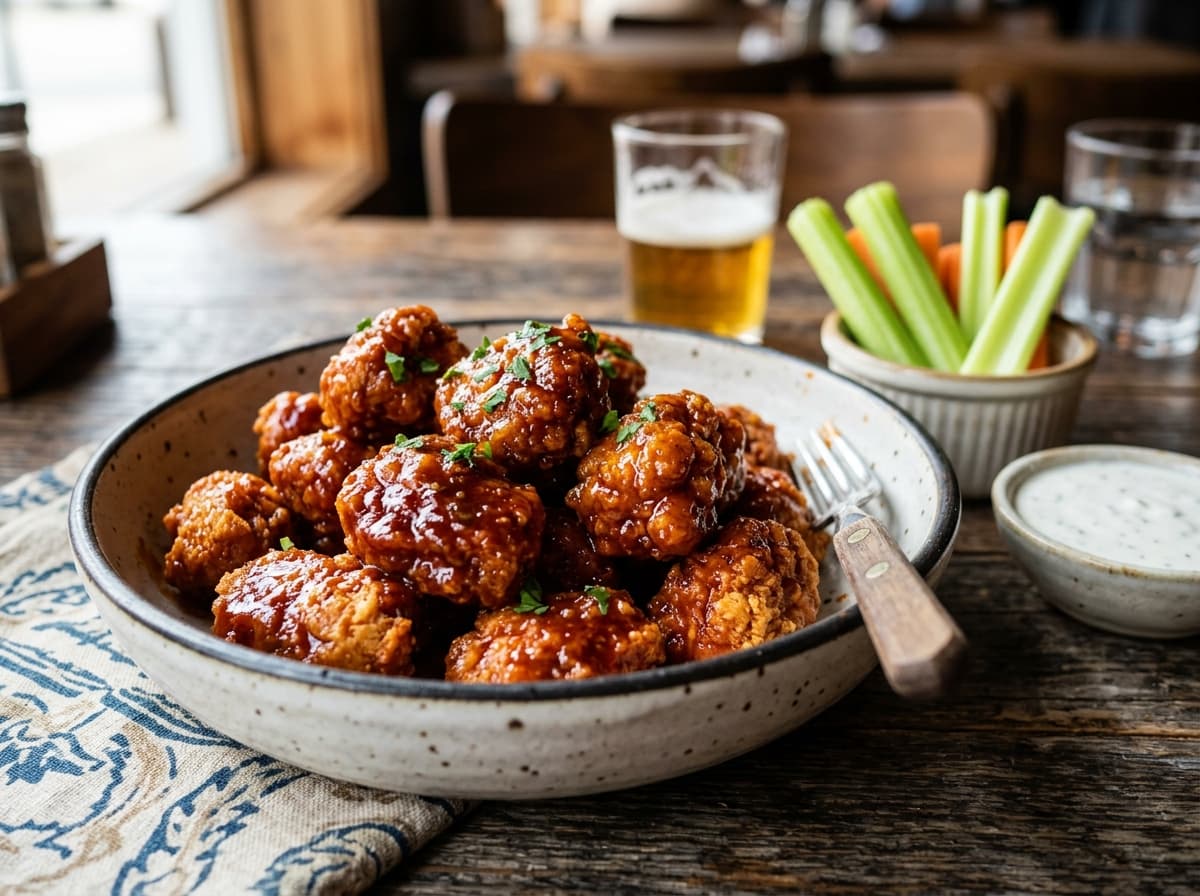 400°F Convection Crunch
Air-Fried Boneless Wings
High-velocity 400°F air circulates rapidly, evaporating surface moisture for Maillard browning. Planning estimate ~168 kcal per 100g vs FDC 171475 fried breaded at ~260 kcal.
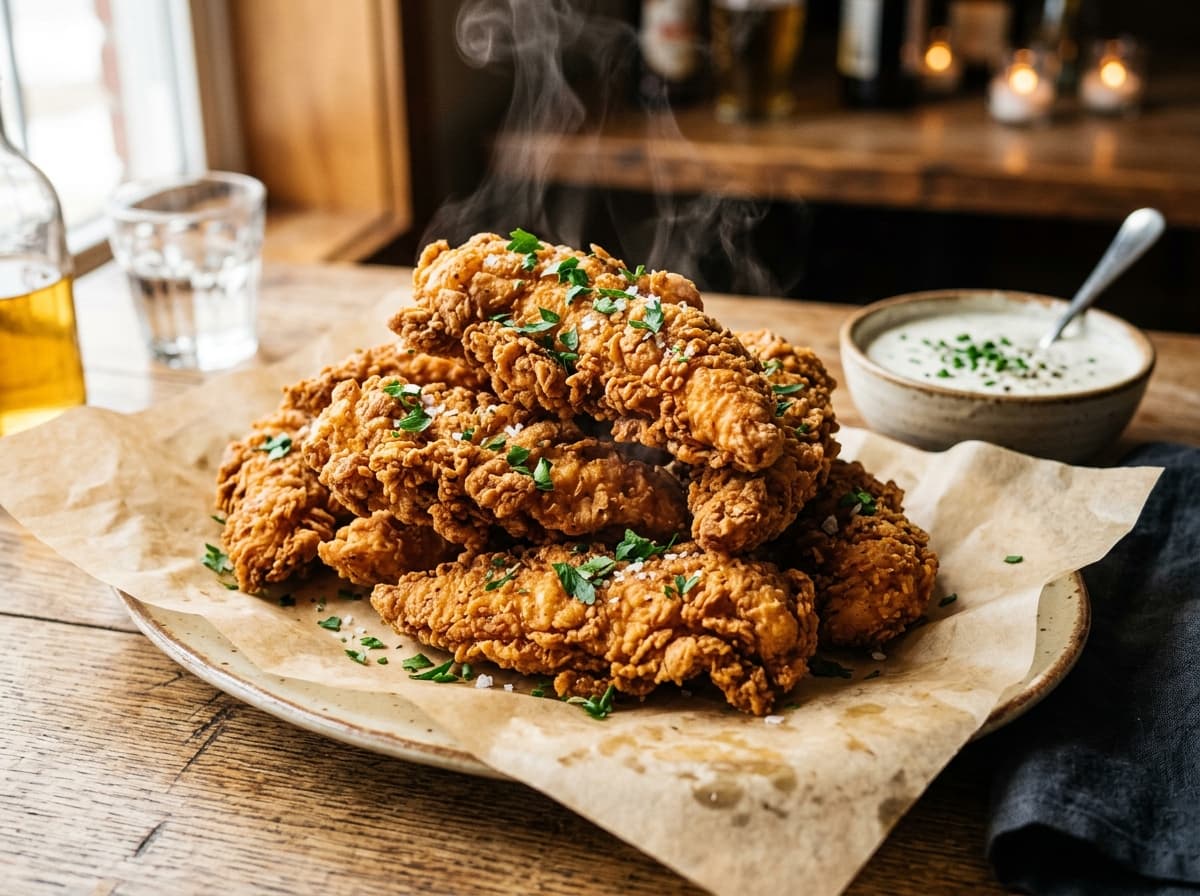 Light Oil Mist
Panko-Crusted Air-Fried Tenders
Whisked egg white and Japanese panko crumbs misted with avocado oil deliver 90% of restaurant finger crunch with only a fraction of absorbed lipids.
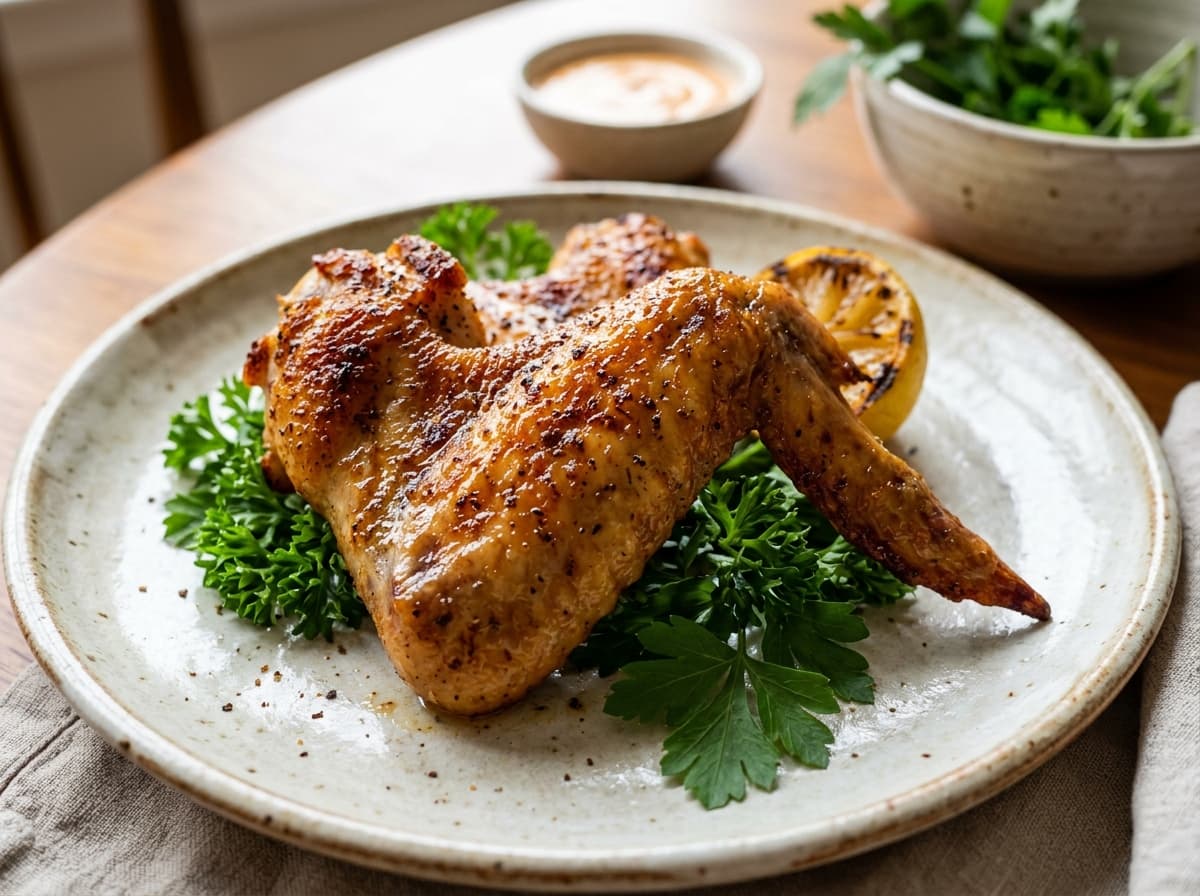 Baking Powder Blister Hack
Crispy Bone-In Whole Wings
Rendered subcutaneous fat drips through basket grates. Planning estimate ~225 kcal per 100g vs FDC 173629 flour-fried wings at ~321 kcal.
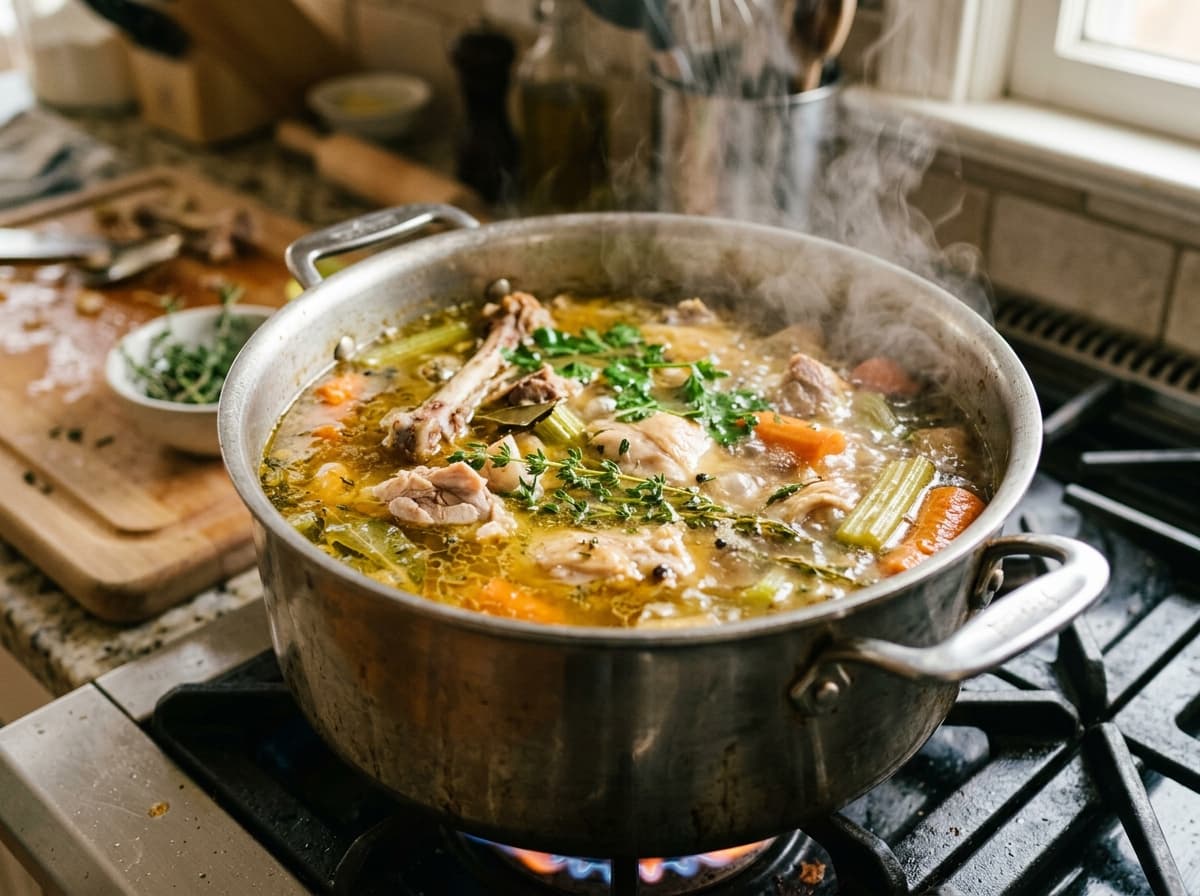 Moist Heat Contrast
Simmered / Poached Comparison
Liquid immersion keeps fibers plump with 77.5% yield and 0g fat, but lacks the savory Maillard crust and shatter crunch of air frying.
How to Accurately Log Air-Fried Chicken in MyFitnessPal & Cronometer
Because air fryers produce crisp textures reminiscent of frying without heavy oil immersion, food diaries frequently overcount fat or select raw entries by mistake. Follow this precise logging protocol.
Standard Cooked Entry with Zero Oil Modifier
- Weigh post-cook: Place cooked meat on a digital scale after 5 minutes of resting (e.g. 150g).
- Search database: Search "Chicken breast, roasted, meat only" (USDA FoodData Central ID 171477).
- Verify nutrition: 150g = 243 kcal, 45.8g protein, 5.1g fat.
- Spray note: A 1-second aerosol/mister spray adds only ~5 calories (<0.5g fat), which is within FDA rounding tolerance and does not require a separate diary entry.
Logging Added Cooking Fat & Breadcrumb Carbs
- If tossed in oil: If you tossed 1 lb of raw chicken in 1 Tbsp olive oil (120 kcal, 14g fat), assume 30% drips into the basket pan. Log the cooked chicken + 1 teaspoon of oil (40 kcal, 4.5g fat) per serving.
- If panko breaded: Log 150g cooked chicken breast plus 1/4 cup panko breadcrumbs (~55 kcal, 11g carbohydrates).
- Avoid deep-fried entries: Do NOT select FDC 171475 fried breaded breast when you ate plain air-fried breast — that row adds ~95 kcal and ~9g fat per 100g vs FDC 171477 roasted skinless.
The 5 Golden Rules of Crispy & Juicy Air Fryer Chicken
Follow these five scientific kitchen rules to guarantee restaurant-quality exterior crunch while keeping interior breast fibers succulent and tender.
Pat Meat Bone-Dry with Paper Towels
Surface moisture is the enemy of crispiness. When water droplets hit superheated air, they flash into steam, inhibiting the Maillard reaction and yielding rubbery skin. Dry thoroughly before seasoning.
Never Overcrowd the Air Fryer Basket
Air fryers work on high-velocity convection circulation. Leave at least 0.5 inches of open air gap between fillets or wings. If chicken pieces touch or overlap, cook in two sequential batches.
Preheat the Basket for 3 Minutes
Placing raw chicken into a cold basket causes the meat to stick to the grill grate and slows the initial sear. Preheating to 380°F ensures immediate thermal sizzle and clean release.
Use High-Smoke-Point Oil in a Refillable Mister
Avoid aerosol cans with chemical propellants that ruin non-stick basket coatings. Use an oil mister filled with pure avocado oil (520°F smoke point) for clean flavor and zero gummy residue.
Use an Instant-Read Digital Thermometer
Do not guess cook times. Breast finishes fast: pull off heat at 160°F (71°C) for a 5-minute carryover rest to 165°F. For thighs, allow internal temp to reach 175°–185°F to melt connective collagen.
Air Fryer vs. Standard Oven vs. Cast-Iron Skillet
Deciding whether to use your countertop air fryer, full-sized convection oven, or cast-iron skillet depends on batch volume and culinary goals.
Choose Air Frying When…
- Cooking 1 to 3 servings rapidly without heating up your kitchen.
- Craving extreme deep-fried crunch on wings and tenders with zero pool grease.
- Logging fewer kcal and fat grams vs FDC 171475 fried breaded entries.
Choose Standard Oven When…
- Batch cooking 4 to 8 lbs of chicken for multi-day meal prep containers.
- Roasting large bone-in whole chickens that cannot fit in a 6-quart basket.
- Baking chicken sheet pans with root vegetables and tubers simultaneously.
Choose Cast-Iron When…
- Building a rich pan sauce with shallots, wine, chicken broth, and garlic fond.
- Wanting steakhouse-style flat conduction crust across the entire surface.
- Basting fillets with aromatic butter and fresh thyme sprigs.
Frequently Asked Questions About Air Fryer Chicken
Detailed answers on air fryer calories, oil logging, cook times, crisp techniques, and choosing the correct USDA FoodData Central entry.
USDA FoodData Central & Food-Science Sources
Macro anchors, oil-uptake research, and cooking-yield factors supporting the calculator on this page.
“Chicken, breast, skinless, boneless, meat only, cooked, roasted (FDC 171477)” — USDA Agricultural Research Service
Key point: Primary logging proxy for naked or lightly misted air-fried skinless breast: ~165 kcal, ~31g protein, ~3.6g fat per 100g cooked.
“Chicken, broilers or fryers, breast, meat and skin, batter, fried (FDC 171475)” — USDA Agricultural Research Service
Key point: Fried breaded breast comparison row: ~260 kcal, ~25g protein, ~13g fat, ~9g carbs per 100g — includes batter and absorbed fryer oil.
“Microstructure, oil distribution and sensory properties of air-fried vs deep-fat fried poultry products” — LWT - Food Science and Technology
Key point: Air-fried poultry retained substantially less internal and surface oil than deep-fat fried samples while achieving comparable exterior crispness in sensory testing.
“USDA Table of Nutrient Retention Factors, Release 6” — USDA ARS
Key point: Standard yield and nutrient retention factors used for air-fry cooking-loss planning estimates across cuts.
“Effects of cooking methods on protein and micronutrient retention in poultry meat” — Meat Science
Key point: Dry-heat convection retains more water-soluble vitamins in the meat than boiling; protein grams stay in the piece while moisture loss concentrates per-100g values.
Related Cooking & Nutrition Guides
Explore comprehensive temperature charts, meal prep calculators, and cooking methods
Disclaimer
This page is for informational and nutrition-logging purposes only — a personal awareness utility, not medical or dietary advice. Macro values use USDA FoodData Central anchors (FDC 171477 roasted breast, FDC 171475 fried breaded, FDC 172388/172386 thigh pair, FDC 173630/173629 wings) plus planning estimates for light oil spray. Cook times and temperatures are kitchen references; actual results vary by appliance, portion size, and coating. I am not a doctor.