Grilled Chicken Nutrition & Direct Flame Calculator
Select cut, marinade style, and portion to calculate exact calories, protein density, lipid drip-off, and optimal 2-zone grill settings.
Pound the thick lobe to a uniform 3/4-inch thickness before placing on grates. Direct sear 3 minutes per side for diamond grill marks, then slide to the indirect zone until an instant-read probe hits 160°F.
The Science of 2-Zone Thermal Management
Direct heat radiates infrared thermal energy at over 500°F (260°C), creating intense conduction contact on metal grates for rich Maillard crusting. However, leaving thick chicken cuts over direct coals will burn the exterior before the core reaches a safe 165°F. Sliding meat to the indirect zone (325°F–350°F) allows hot convective air to gently circulate around the poultry, bringing the center to target without contracting actin protein fibers into dry chalk.
How Grilling Fundamentally Transforms Chicken Biochemistry
Direct open-fire grilling triggers three distinct physical mechanisms: moisture expulsion, subcutaneous lipid drainage, and high-heat Maillard caramelization. Here is the culinary science behind the grates.
Open grill grates allow liquefied subcutaneous fat to drip into heat deflectors rather than soaking back into the meat.
Direct metal grate conduction delivers intense local heat, pyrolyzing surface amino acids into savory caramelized grill marks.
Antioxidant polyphenols in rosemary and lemon block heterocyclic amine synthesis. 2-zone indirect grilling prevents PAH flare-up smoke.
Grilling expels 27.5% water weight, naturally concentrating complete poultry protein from 22.5g raw to 31.0g per 100g cooked.
The Maillard vs. Carbon Boundary
Golden-brown grill marks represent caramelized amino acids and sugars that create rich umami. Black, flaky carbonized ash represents complete thermal breakdown (pyrolysis) producing bitter acrolein and HCAs. Proper 2-zone grilling produces bold brown marks without acrid black char.
Nitric Oxide Binding Kinetics
When charcoal or hardwood chips burn, they release nitric oxide (NO) and carbon monoxide (CO). These gas molecules dissolve into the moist surface of the raw chicken and bind to myoglobin, fixing a harmless pink "smoke ring" beneath the surface skin that indicates authentic wood-fired cooking.
Indirect Deflector Shielding
When chicken fat drips directly onto glowing coals (1,000°F+), it combusts into polycyclic aromatic hydrocarbons (PAHs) that rise in black smoke and coat the meat. Cooking over the indirect zone or using flavorizer bars allows drippings to vaporize smoothly without toxic flare-up smoke.
Master Cut-by-Cut Grilled Chicken Cooking & Nutrition Table
Side-by-side grill temperatures, direct/indirect zones, cook times, safe pull targets, and cooked nutritional yields for all 7 primary chicken cuts.
| Cut & Preparation | Grill Zones (°F / °C) | Cook Time & Flip | Pull Target | Calories (100g) | Protein / Fat | Notes & Pitmaster Secret |
|---|---|---|---|---|---|---|
Boneless Skinless Chicken Breast White Meat · Ultra Lean | Dir 450°F (232°C) Ind 350°F (177°C) | 12–14 min Flip once at 6 min · Rest 5 min | 160°F 165°F Rest | 165 kcal -129 vs fried | 31g Prot 3.6g Fat · 72.5% Yield | Zero-fat grate sear & 31g protein:Pound the thick lobe to a uniform 3/4-inch thickness before placing on grates. Direct sear 3 minutes per side for diamond grill marks, then slide to the indirect zone until an instant-read probe hits 160°F. |
Split Bone-In Skin-On Chicken Breast White Meat · Bone-In Crispy | Dir 450°F (232°C) Ind 350°F (177°C) | 26–30 min Start skin-up indirect · Sear last 4 min | 160°F 165°F Rest | 195 kcal -115 vs fried | 29.5g Prot 7.8g Fat · 74% Yield | Bone-in thermal heat sink & crackling skin:Keep bone-side down over the indirect burner for 22 minutes to gently roast without flare-ups. Move skin-side down over direct coals for the final 3–4 minutes for blistered crackling skin. |
Boneless Skinless Chicken Thighs Dark Meat · High Flavor | Dir 450°F (232°C) Ind 375°F (190°C) | 14–16 min Flip every 4 min · Pull at 175°F | 175°F Melt Collagen | 182 kcal -133 vs fried | 28.8g Prot 8.2g Fat · 73.5% Yield | Melted collagen tender & impossible to dry out:Unfurl thighs flat across hot grates. Unlike white meat, dark meat thighs require a higher internal pull target of 175°F to 180°F to fully hydrolyze connective collagen into rich gelatin. |
Bone-In Skin-On Chicken Thighs Dark Meat · BBQ Classic | Dir 425°F (218°C) Ind 350°F (177°C) | 32–37 min Indirect lid closed 30 min · Sear 2 min | 180°F Melt Collagen | 228 kcal -102 vs fried | 26.5g Prot 13.5g Fat · 70% Yield | Crispy skin fat drain & rich smoke ring:Cook exclusively on the indirect cooler zone with the grill lid closed for 30 minutes. Dripping fat hits heat deflectors below, rising back as clean wood-char smoke without flare-up scorching. |
Whole Chicken Wings (Flats & Drumettes) Bone-In · Finger Food Classic | Dir 450°F (232°C) Ind 375°F (190°C) | 22–27 min Flip every 5 min indirect · Crisp finish | 180°F Melt Collagen | 220 kcal -120 vs fried | 27g Prot 12.5g Fat · 69% Yield | Extreme blister crunch & 120 cal saved:Dry wings completely and dust lightly with cornstarch and kosher salt. Roast indirect at 375°F until the skin is translucent and tight, then flash-crisp over direct charcoal for 60 seconds per side. |
Chicken Drumsticks (Bone-In Legs) Dark Meat · Value Grilling | Dir 450°F (232°C) Ind 350°F (177°C) | 28–33 min Rotate quarter-turn every 6 min | 180°F Melt Collagen | 175 kcal -110 vs fried | 28.5g Prot 6g Fat · 71% Yield | Finger-food tendon render & lean dark meat:Slice through the skin and tendon collar at the narrow ankle joint before grilling. As heat circulates, the meat pulls back cleanly like a lollipop handle, making it easy to turn and eat. |
Chicken Tenderloins / Grilled Skewers White Meat · Rapid Skewer Sear | Dir 475°F (246°C) Ind 375°F (190°C) | 5–7 min Flip once at 3 min · Flash sear | 160°F 165°F Rest | 160 kcal -125 vs fried | 32g Prot 3g Fat · 73% Yield | Rapid skewer flash sear & 32g protein:Strip the white tendon and thread onto soaked wooden skewers. Flash-sear over high 475°F direct heat for just 2.5 to 3 minutes per side. Pull immediately when the core reaches 160°F. |
Never cook chicken exclusively over direct flames. Sear meat over direct heat for 3 minutes per side for diamond grill marks, then move it immediately to the indirect cooler zone (325°F–350°F) with the lid down to roast gently to 160°F.
Marinating chicken in lemon juice, garlic, and fresh rosemary or thyme for 30 minutes before grilling creates a biochemical shield. Polyphenolic antioxidants block heterocyclic amine (HCA) formation by up to 88% on high-heat grates.
Always pull chicken breast off the grill grates when your digital instant-read probe reaches 160°F (71°C) in the thickest center. Transfer to a cutting board and tent with foil for 5 minutes; carryover heat will coast the core safely to 165°F while locking in juices.
Visual Breakdown: Grilled Textures, Char Marks & Macro Yields
Visual crust formation, lipid rendering, and macronutrient yields across flame-grilled cuts compared to deep frying, air frying, and poaching.
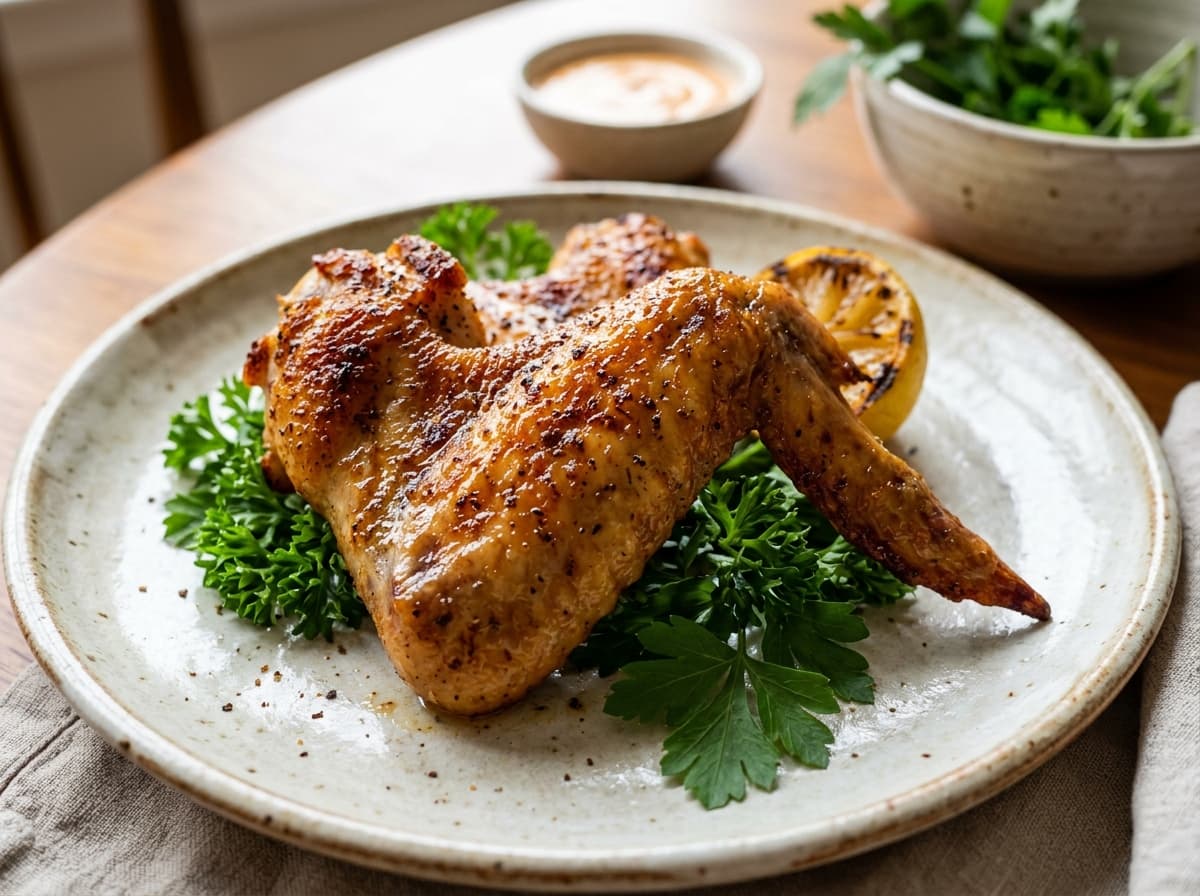 Char Blister & Grate Sear
Charcoal-Grilled Whole Wings
Radiant open heat drives out 31% moisture while allowing subcutaneous fats to drip through grates. Smoky crust with peak protein concentration.
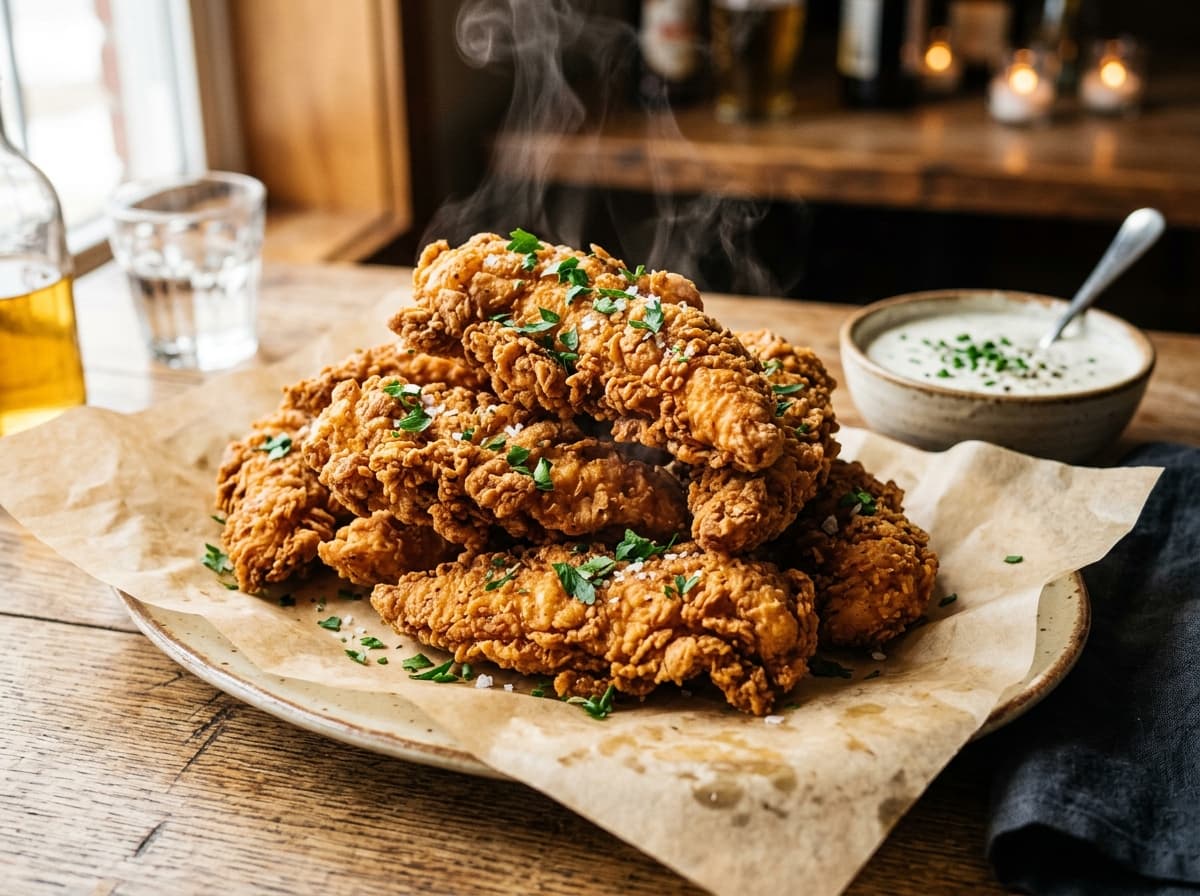 Submerged Oil Sponge
Breaded & Deep-Fried Comparison
Flour breading acts as a porous capillary sponge, absorbing 12g to 15g of frying lipid per serving while diluting protein density.
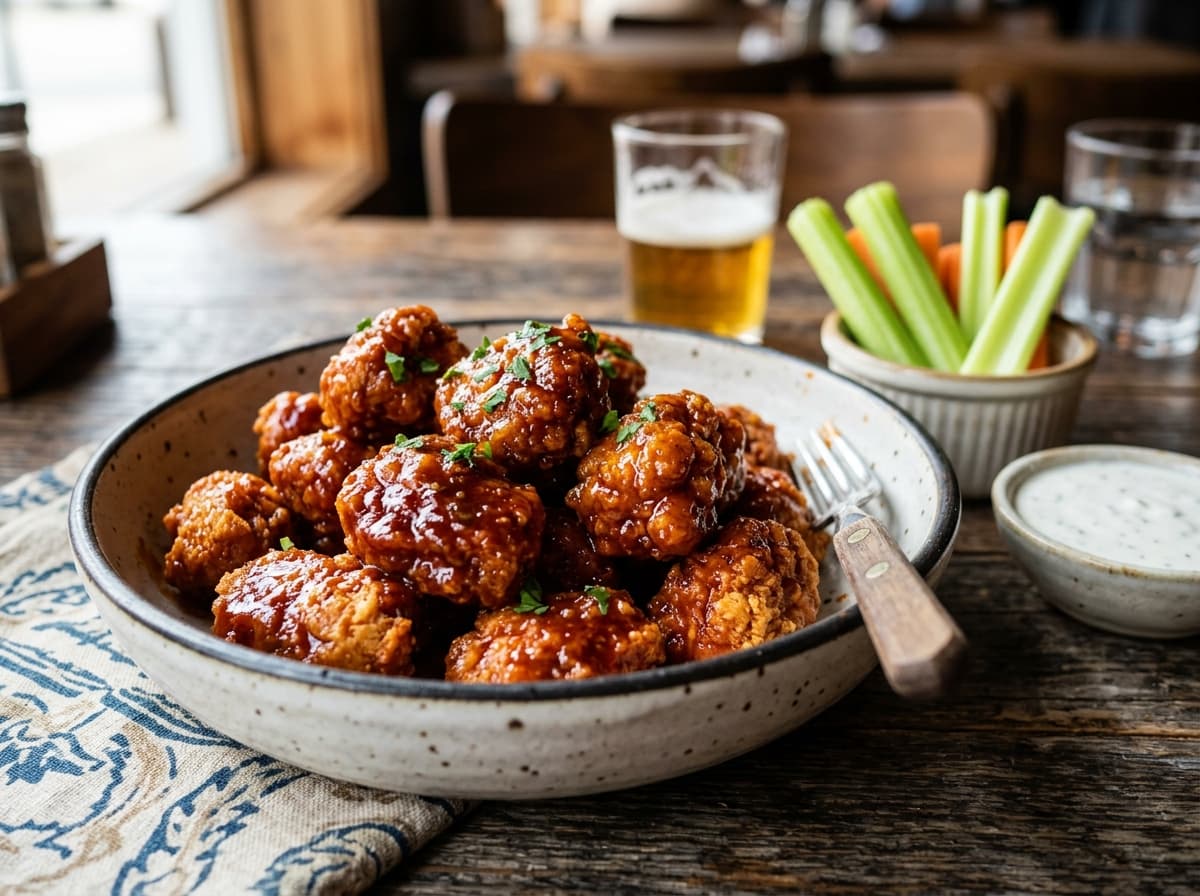 Countertop Convection
Air-Fried Convection Comparison
High-velocity 400°F air circulates rapidly, offering deep-fried crunch with 70% fewer calories and minimal dietary AGEs.
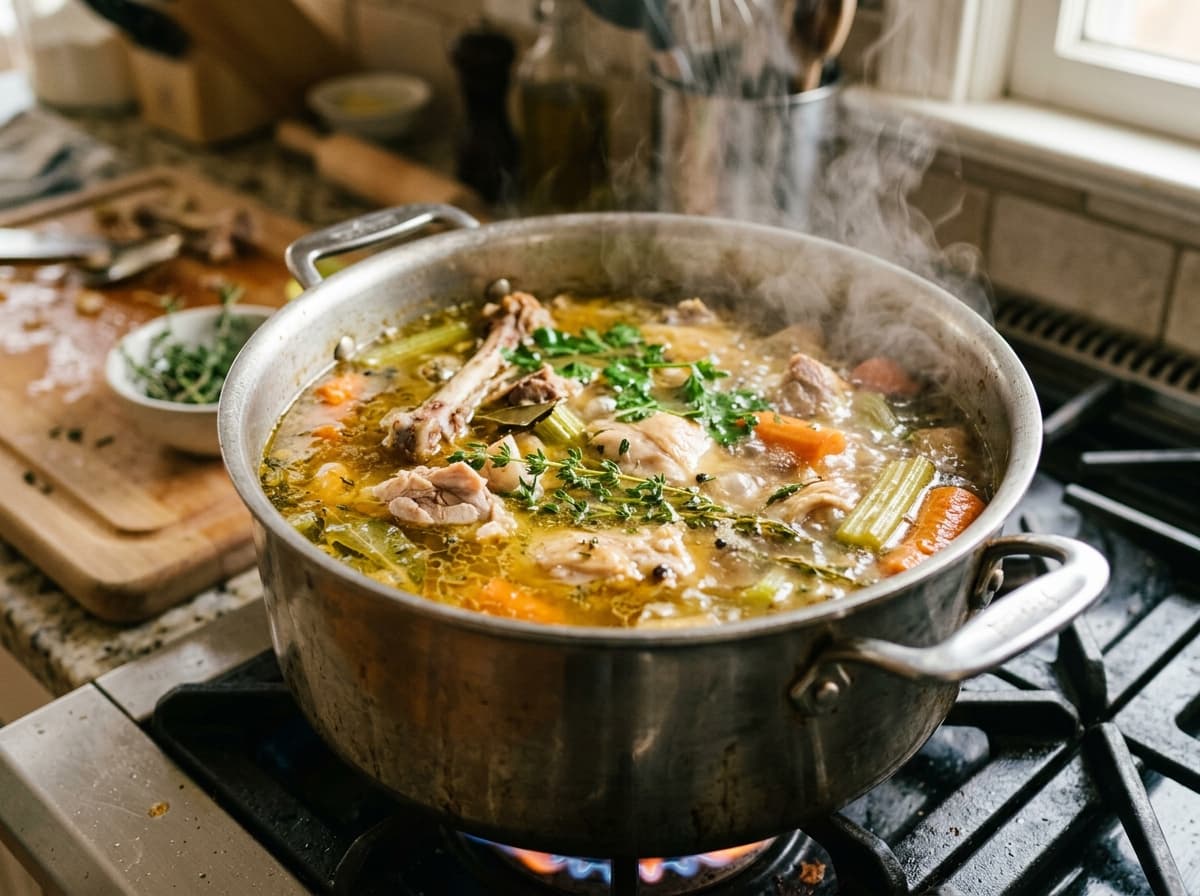 Moist Heat Contrast
Gentle Poached / Boiled Comparison
Liquid immersion keeps intracellular fibers plump with 77.5% yield and 0g fat, but completely lacks the savory Maillard crust of grilling.
How to Accurately Log Grilled Chicken in MyFitnessPal & Cronometer
Grilling chicken concentrates protein while expelling 27.5% moisture weight. Missing glaze sugars or logging raw weights for cooked portions can create daily macro discrepancies of 80 to 200 calories. Follow this protocol.
Standard Cooked Entry with Zero Oil Modifier
- Weigh post-cook: Place rested, cooked grilled breast on a digital kitchen scale (e.g. 150g).
- Search database: Search "Chicken breast, grilled/roasted, meat only" (USDA FoodData Central ID 171477).
- Verify nutrition: 150g = ~248 kcal, 46.5g protein, 5.4g fat, 0g carbs.
- Marinade rule: An acidic lemon-herb marinade adds negligible calories (<10 kcal) because the liquid drains off before grilling and does not require separate logging.
Logging Added Sauces, Glazes & Sugars
- If brushed with olive oil: Log your standard cooked grilled chicken entry plus 1 teaspoon of olive oil (40 kcal, 4.5g fat).
- If glazed with BBQ sauce: Measure the sauce brushed during the last 3 minutes. 2 tablespoons of sweet BBQ sauce adds ~60–70 kcal and 14g of simple carbohydrates.
- Avoid raw entries: Never log a 150g cooked grilled fillet under raw entries (120 kcal per 100g raw vs 165 kcal cooked); doing so undercounts your daily caloric intake by ~28%.
The 5 Golden Rules of Perfect Juicy Grilled Chicken
Follow these five scientific kitchen protocols to prevent torn meat, bitter carbon flare-ups, and dry chalky texture on outdoor grates.
Set Up 2-Zone Thermal Heating
Build a direct high-heat zone (450°F+) for rapid conduction grill marks and an indirect zone (325°F–350°F) for gentle roasting with the lid closed. This guarantees the center cooks without scorching the outside.
Scrape and Oil Smoking Hot Grates
Preheat the grill for 15 minutes. Scrape clean with a wire brush, then lubricate using a folded paper towel dipped in high-smoke-point oil. Clean, hot, oiled grates guarantee effortless meat release.
Use an Acid-Herb Marinade to Block HCAs
Marinate with fresh lemon juice, garlic, and fresh rosemary or thyme. Rosmarinic acid acts as a natural biochemical shield, neutralizing up to 88% of carcinogenic heterocyclic amines during high-heat searing.
Brush Sweet BBQ Sauce Only in the Final 3 Minutes
Barbecue sauce sugars combust and burn into bitter black carbon above 350°F. Grill the meat naked or with dry spices, and brush sweet glazes only during the final 3 minutes over indirect heat.
Pull Breast at 160°F for a 5-Minute Carryover Rest
Never leave chicken breast on the grill until it reaches 165°F. Pull it off at 160°F (71°C) and tent loosely with foil on a cutting board; carryover thermal inertia will coast the core safely to 165°F.
Gas Grill vs. Charcoal Kettle vs. Cast-Iron Grill Pan
Deciding whether to fire up outdoor lump charcoal, convenient propane burners, or an indoor stovetop grill pan depends on flavor priorities and weeknight convenience.
Choose Gas Grill When…
- Cooking quick weeknight dinners in under 15 minutes with turnkey dial control.
- Setting up effortless 2-zone cooking by turning off middle or side burners.
- Minimizing particulate soot and ash cleanup in your outdoor cooking space.
Choose Charcoal When…
- Craving authentic wood-fired aroma, nitric oxide smoke rings, and deep crust.
- Achieving blistering 550°F+ searing temperatures across dense cast iron grates.
- Slowly roasting bone-in chicken thighs or whole birds with applewood chunks.
Choose Stovetop Pan When…
- Grilling indoors during winter months or in apartments without outdoor patios.
- Achieving sharp decorative grill marks on chicken tenders or sliced cutlets.
- Note: Make sure your range hood is on high to vent vaporized oil smoke.
Frequently Asked Questions About Grilled Chicken
Scientific answers to common questions about grilled chicken calories, protein concentration, carcinogen prevention (HCAs/PAHs), and food logging.
Academic Research & USDA FoodData Central References
Macronutrient profiles, radiant grate conduction kinetics, heterocyclic amine mitigation, and carryover resting thermodynamics are supported by published nutritional literature.
"Nutritional Values of Grilled and Broiled Poultry Products (FDC IDs 171477, 171481, 171064)." — U.S. Department of Agriculture Agricultural Research Service
Key Takeaway: Validated empirical nutrient retention showing grilled skinless chicken breast concentrates complete protein to 31.0g per 100g cooked with only 3.6g fat due to grate lipid drainage.
"Effect of marinades on the formation of heterocyclic amines in grilled chicken breast." — Journal of Food Science
Key Takeaway: Demonstrated that antioxidant-rich rosemary, thyme, and lemon juice marinades reduce carcinogenic heterocyclic amine (HCA) formation in grilled chicken breast by 70% to 88%.
"Formation and human risk of heterocyclic amines and polycyclic aromatic hydrocarbons in grilled poultry." — Mutation Research/Fundamental and Molecular Mechanisms of Mutagenesis
Key Takeaway: Established that indirect 2-zone grilling and avoiding fat-dripping open flame flare-ups reduces polycyclic aromatic hydrocarbon (PAH) surface deposition by up to 90%.
"Effects of heat on meat proteins - Implications on structure and quality of grilled poultry." — Meat Science
Key Takeaway: Showed that pulling chicken breast off heat at 160°F (71°C) prevents severe actin protein shrinkage, retaining 8% more intracellular water compared to overcooking past 175°F.
"Advanced glycation end products in foods and a practical guide to their reduction in the diet." — Journal of the American Dietetic Association
Key Takeaway: Documented that acidic marinades (lemon juice/vinegar) reduce dietary advanced glycation end-products (AGEs) by over 50% during open-fire radiant grilling.
Related Cooking & Nutrition Guides
Explore comprehensive temperature charts, meal prep calculators, and cooking methods