Interactive Multi-Cut Chicken Macro Engine
Select cut, skin status, cooking method, and exact weight to calculate calories, protein, and macronutrient breakdowns instantly.
For 100 g (100g) portion
Visual Chicken Cut Gallery: Anatomy, Fibers & Calories
Not all chicken meat behaves identically in the body. Understand the anatomical origins, muscle fiber types (Type IIb fast-twitch white vs. Type I slow-twitch dark), and baseline calorie profiles across every primary cut.
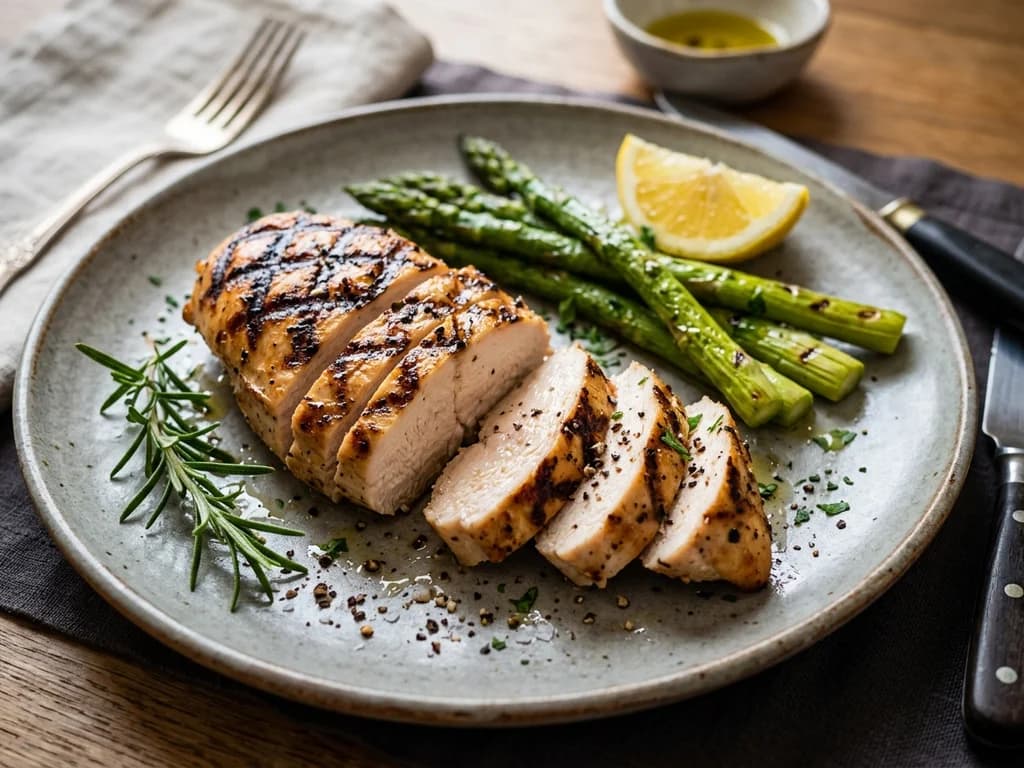
Chicken Breast
FDC #171477Pectoralis major muscle covering the ventral chest. Dense, uniform white muscle fiber matrix.
2-Zone Grilling, Sous-Vide, or Gentle Poaching
Target Pull: 160°F (71°C) with 5-minute carryover rest to 165°F
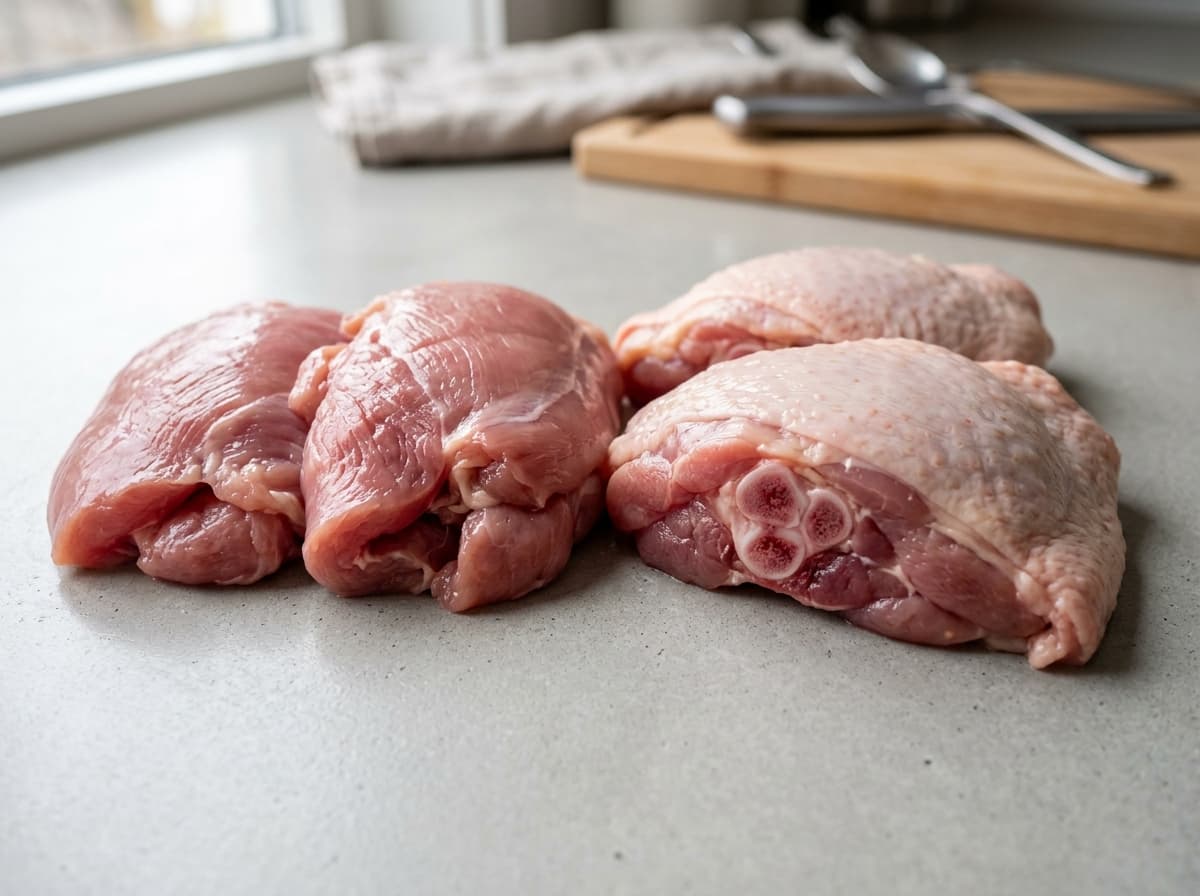
Chicken Thigh
FDC #172388Upper pelvic limb segment attached to hip. Rich in connective collagen and blood vessels.
Oven-Roasting, Braising, Stewing, or Cast-Iron Sear
Target Pull: 175°F–185°F (80°C–85°C) to break tough collagen into rich gelatin
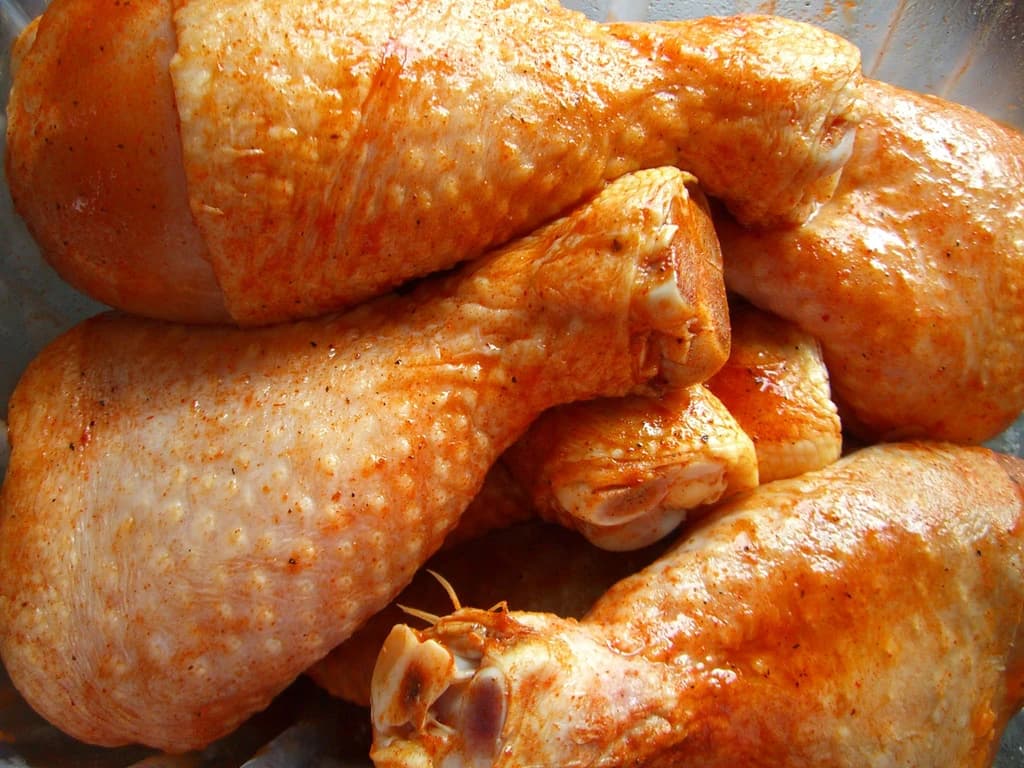
Chicken Drumstick
FDC #172387Lower leg portion below knee joint (tibia and fibula). Supported by strong collagenous tendon sheaths.
Smoking, Oven Roasting, or Air-Frying
Target Pull: 180°F–185°F (82°C–85°C) to soften heavy leg tendons
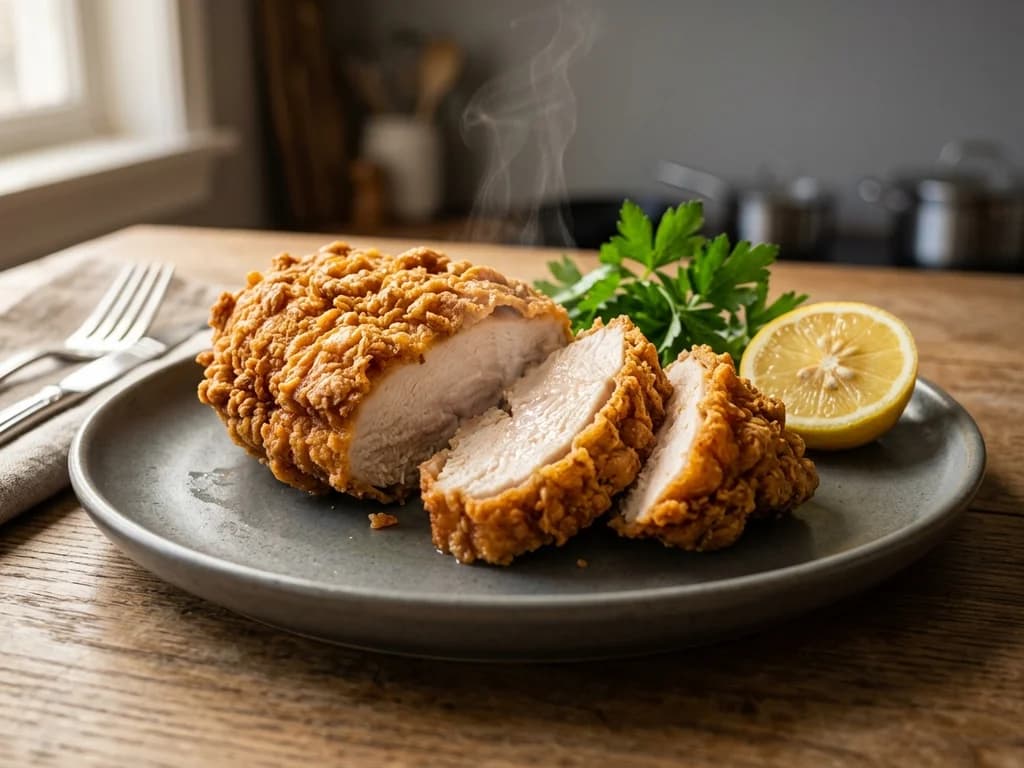
Chicken Wings (Flats & Drumettes)
FDC #171056Three-segment forelimb (drumette, flat/wingette, and wingtip). Highest skin-to-meat surface area ratio.
Convection Air-Frying, Deep Frying, or Smoked & Grilled
Target Pull: 180°F–190°F (82°C–88°C) to render wing skin fat completely
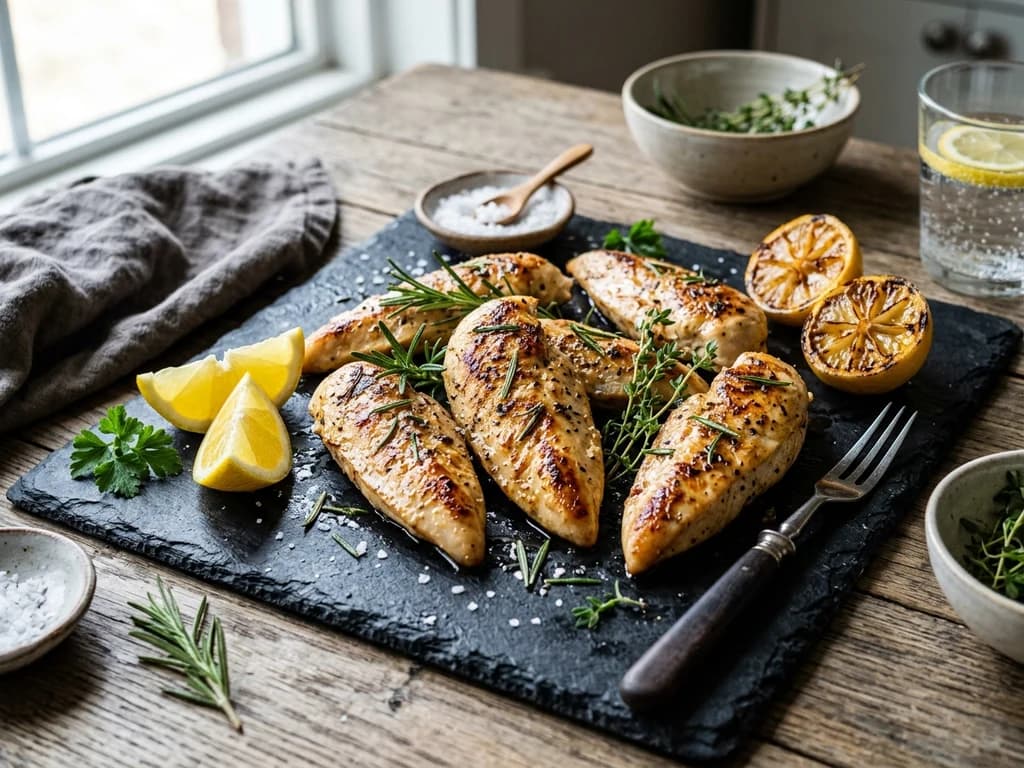
Chicken Tenderloin (Tenders)
FDC #171477Pectoralis minor muscle located directly beneath breast along the breastbone. Naturally tender without exercise stress.
Quick Pan-Sear, Air-Frying, or Skewer Grilling
Target Pull: 160°F (71°C) with 3-minute carryover rest
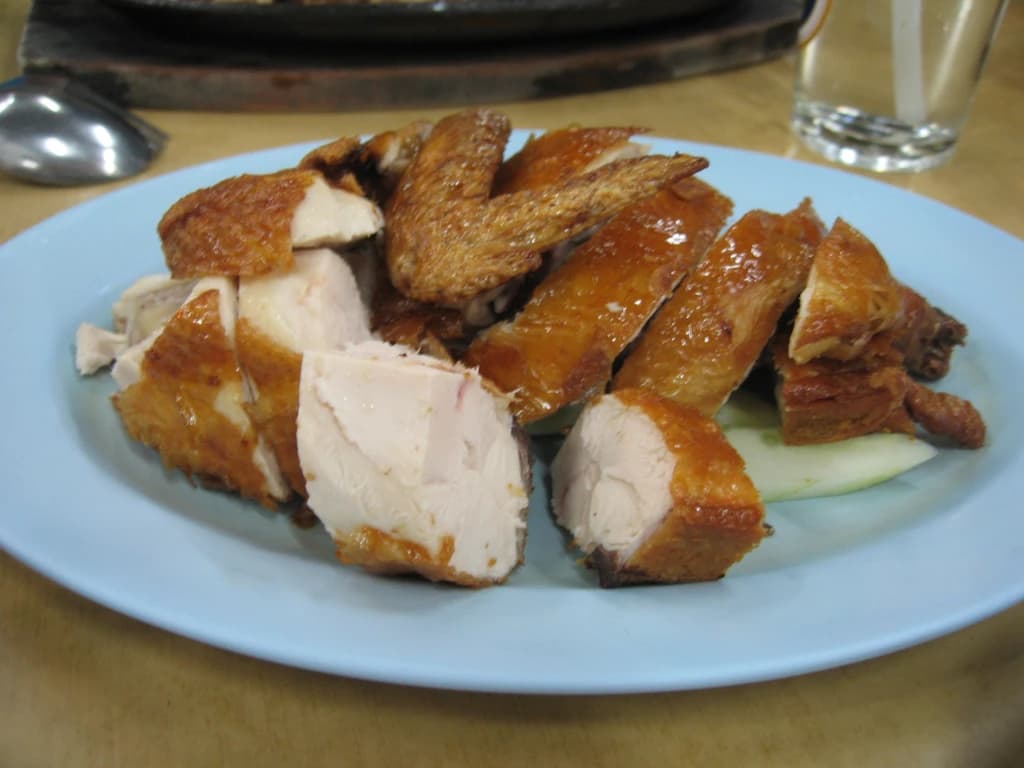
Whole Chicken (Weighted Average)
FDC #171142Natural balance of light breast meat (60%) and dark leg/thigh meat (40%).
Spatchcock Roasting, Rotisserie, or Dutch Oven Braising
Target Pull: 160°F breast / 175°F thigh
Comprehensive Chicken Calorie & Macro Matrix
USDA-verified nutritional data comparing 100g cooked baseline, skin-on vs skinless impact, and standard imperial meal portions (4 oz, 6 oz, 8 oz).
| Chicken Cut | Skinless (100g) | Skin-On (100g) | Protein (100g) | Fat (100g) | 4 oz Portion | 6 oz Portion | 8 oz Portion |
|---|---|---|---|---|---|---|---|
| Chicken Wings (Flats & Drumettes)White Fiber Matrix | 145 kcal | 254 kcal | 30.5g | 2.5g | 164 kcal | 247 kcal | 329 kcal |
| Chicken DrumstickDark Fiber Matrix | 155 kcal | 216 kcal | 23.9g | 5.7g | 175 kcal | 264 kcal | 352 kcal |
| Chicken Tenderloin (Tenders)White Fiber Matrix | 158 kcal | 158 kcal | 32.1g | 2.8g | 179 kcal | 269 kcal | 359 kcal |
| Chicken BreastWhite Fiber Matrix | 165 kcal | 197 kcal | 31.02g | 3.57g | 186 kcal | 281 kcal | 375 kcal |
| Whole Chicken (Weighted Average)Mixed Fiber Matrix | 172 kcal | 215 kcal | 28.5g | 5.9g | 194 kcal | 292 kcal | 390 kcal |
| Chicken ThighDark Fiber Matrix | 179 kcal | 232 kcal | 24.84g | 8.24g | 202 kcal | 304 kcal | 406 kcal |
The Skin Factor & Cooking Method Multiplier
Why two people eating "100g of chicken" can log anywhere from 165 calories to 290 calories. Discover how subcutaneous fat layers and culinary heat transfer dictate final macros.
The Anatomy of Chicken Skin: Subcutaneous Lipid Storage
Skin = 55% Fat · 35% Water · 10% CollagenUnlike mammalian red meat where fat is heavily marbled inside the muscle fibers, poultry stores roughly 80% of its fat subcutaneously (directly under the dermal skin layer). Removing the skin physically eliminates the vast majority of dietary saturated and monounsaturated lipids before ingestion.
Relatively low skin-to-meat ratio. Pectoralis muscle is thick, so skin only covers one superficial side.
Higher subcutaneous fat layer under thigh skin. Essential for keeping dark meat luscious during high-heat roasting.
Highest surface-area-to-meat ratio in the bird. Wings are almost entirely skin and bone, yielding a dramatic fat load.
Skin wraps 360 degrees around the tibia bone with underlying yellow fat pads around the ankle joint.
How 6 Cooking Methods Alter Calories, Fat & Carbs (Per 100g Cooked Breast)
Oven-Roasted / Baked
Baseline CleanDry convection heat. Natural fat renders into pan drippings without oil immersion.
Charbroiled / Grilled
Leanest FinishDirect radiant heat over open grates. Rendered fat drains away into coals.
Poached / Boiled
Zero Added FatSubmerged in simmering broth or water. 100% moisture retention with zero oil.
Air-Fried (Light Oil Spray)
High Crisp / Low CalHigh-velocity convection air with a light mist of avocado or olive oil spray.
Pan-Seared in Olive Oil
+50 kcal Added FatCooked in skillet with 1–2 teaspoons of cooking oil absorbed during searing.
Deep-Fried & Flour-Battered
+95 kcal & +11g CarbsCoated in flour or buttermilk batter and submerged in 350°F oil.
The Raw vs. Cooked Weight Trap: Fix the #1 Logging Error
Why millions of fitness enthusiasts accidentally stall their fat loss on MyFitnessPal and Cronometer: confusing raw scale weight with cooked scale weight.
Interactive Tare Weight Converter
To eat 150g of cooked chicken breast, weigh out 200g raw on your food scale.
If you plate 200g of cooked chicken breast but select "Raw Chicken Breast" in MyFitnessPal, you record 240 kcal instead of the true 330 kcal. An unrecorded 90-calorie gap across 2 meals daily creates an unaccounted 1,260 surplus weekly — completely stalling fat loss.
Standard Portion Equivalence Table (Chicken Breast)
| Raw Weight | Cooked Yield (-25%) | Actual Calories | Actual Protein | Typical Serving |
|---|---|---|---|---|
| 100g (3.5 oz) | 75g (2.6 oz) | ~124 kcal | 23.3g | Small Snack |
| 133g (4.7 oz) | 100g (3.5 oz) | ~165 kcal | 31.0g | Standard 100g Plate |
| 200g (7.1 oz) | 150g (5.3 oz) | ~248 kcal | 46.5g | Healthy Meal Cutlet |
| 267g (9.4 oz) | 200g (7.1 oz) | ~330 kcal | 62.0g | Bodybuilder Dinner |
| 454g (16.0 oz) | 340g (12.0 oz) | ~561 kcal | 105.4g | 1 lb Whole Pack |
Which Chicken Cut Fits Your Lifestyle Goal?
There is no universal "best" chicken cut. Choose the optimal cut based on your metabolic phase: cutting body fat, packing on muscle mass, sustaining ketosis, or managing household grocery budgets.
Aggressive Fat Loss & Cutting
With 75%–80% of calories derived directly from complete protein, skinless breast triggers maximum peptide YY and GLP-1 satiety hormone release while utilizing 20%–30% of its energy via the Thermic Effect of Food (TEF).
Muscle Hypertrophy & Hardgainer Bulking
Athletes struggling to eat enough clean calories benefit from dark thigh meat. The higher fat density enables caloric surplus without gastrointestinal bloat, while delivering twice the zinc and iron for hormonal recovery.
Ketogenic & Zero-Carb Lifestyle
Ketosis demands moderate protein and high dietary fat. Skin-on dark cuts provide zero carbohydrates with rich monounsaturated oleic acid (the same lipid in extra virgin olive oil), sustaining stable blood ketone levels.
Budget Meal Prep & Grocery Economics
Purchasing whole chickens or bone-in leg quarters cuts grocery protein expenses by up to 50%. The bones, cartilage, and backs can be simmered into gelatin-rich, anti-inflammatory bone broth, capturing 100% of carcass value.
Beyond Calories: The White vs. Dark Meat Micronutrient Split
While chicken breast dominates calorie and protein efficiency, chicken thighs and dark cuts dominate mineral bioavailability. See which cut provides the specific vitamins and minerals your body needs.
| Micronutrient | Chicken Breast (100g) | Chicken Thigh (100g) | Dominant Cut | Biological Function |
|---|---|---|---|---|
| Niacin (Vitamin B3) | 13.7 mg (86% DV) | 6.5 mg (41% DV) | Breast (+110%) | Vital coenzyme for converting macronutrients into cellular ATP energy and supporting DNA repair. |
| Vitamin B6 (Pyridoxine) | 0.60 mg (35% DV) | 0.35 mg (21% DV) | Breast (+71%) | Required for amino acid metabolism, red blood cell synthesis, and dopamine/serotonin creation. |
| Bioavailable Iron (Heme) | 1.04 mg (6% DV) | 1.33 mg (8% DV) | Thigh (+28%) | Essential component of hemoglobin and myoglobin, delivering oxygen directly to working muscle fibers. |
| Zinc | 1.00 mg (9% DV) | 2.37 mg (22% DV) | Thigh (+137%) | Crucial trace mineral for immune defense, cellular division, testosterone production, and wound healing. |
| Vitamin B12 (Cobalamin) | 0.34 mcg (14% DV) | 0.49 mcg (20% DV) | Thigh (+44%) | Maintains myelin sheaths protecting nerve cells and prevents megaloblastic anemia. |
| Potassium | 256 mg (5% DV) | 238 mg (5% DV) | Breast (+8%) | Primary intracellular electrolyte balancing fluid pressure, reducing cramping, and buffering sodium. |
Frequently Asked Questions: Calories in Chicken
Evidence-backed answers to the most common nutritional questions regarding chicken cuts, cooking methods, and dietary logging.
Scientific Citations & USDA FoodData Central References
All nutritional values, raw-to-cooked yield conversions, and lipid ratios in this guide are grounded in laboratory data from the USDA Agricultural Research Service and peer-reviewed journals.
Chicken, broilers or fryers, breast, meat only, cooked, roasted (FDC ID: 171477)
Standardized national laboratory nutrient breakdown establishing 165 kcal, 31.02g protein, and 3.57g total lipid per 100g cooked skinless breast.
Chicken, broilers or fryers, thigh, meat only, cooked, roasted (FDC ID: 172388)
Defines 179 kcal, 24.84g protein, and 8.24g total lipid per 100g cooked skinless dark thigh meat, validating higher zinc, iron, and potassium levels.
Chicken, broilers or fryers, wing, meat and skin, cooked, roasted (FDC ID: 171119)
Establishes 254 kcal, 23.82g protein, and 16.91g lipid per 100g skin-on cooked wing, quantifying the significant caloric impact of subcutaneous wing fat.
Nutrient Retention and Moisture Loss in Cooked Muscle Foods: The Impact of Culinary Thermal Processing
Quantifies the 25%–28% thermal water evaporation curve across grilling, baking, and poaching, validating the 1.33× raw-to-cooked tare multiplier.
Dietary Protein, Satiety, and Energy Intake: The Role of Lean Poultry in Body Composition Regulation
Clinical trial proving that skinless chicken breast produces an 80% higher satiety score per calorie compared to ultra-processed and high-fat protein matrices.
Explore Dedicated Chicken Cut & Cooking Guides
Deep-dive into individual cut calculators, recipes, and thermal science
Nutritional awareness & food logging disclaimer
All caloric and macronutrient values on this page are derived from USDA FoodData Central Standard Reference (SR Legacy) and Foundation Foods databases. Real-world poultry composition varies slightly based on breed genetics, bird age, feed composition, water injection during commercial chilling (air-chilled vs water-chilled), and culinary moisture evaporation. For precise personal dietary tracking, weigh cooked portions on a calibrated food scale and adjust for any cooking oils, marinades, glazes, or breading. This guide is for educational and nutritional tracking awareness only and does not constitute formal medical or dietary advice.