Configure Wings & Preparation
Cut, cooking method, toss sauce, and digital scale bone tare
Nutrition Results & Breakdown
USDA FoodData Central referenced
70 calories per wing piece • ~240g edible meat
A whole bone-in portion of ~444g gross scale weight yields approx 240g edible meat & skin, with 204g (46%) discarded as non-edible skeletal bones.
Sauces dramatically alter wings macros. A dry or hot buffalo rub maintains keto compatibility, whereas honey garlic and BBQ add up to 400+ calories and 90g sugars per dozen.
| Sauce Style | Calories / Wing | Carbs / Sugar | Sodium / Wing | Keto Rating |
|---|---|---|---|---|
| Plain / Naked (No Sauce)(Active) | +0 kcal | 0g / 0g | +0 mg | Keto Friendly |
| Classic Buffalo (Medium / Hot) | +24 kcal | 0.4g / 0.2g | +260 mg | Keto Friendly |
| Hickory Brown Sugar BBQ | +36 kcal | 8.6g / 7.4g | +185 mg | High Sugar |
| Sticky Honey Garlic Glaze | +42 kcal | 10.4g / 9.2g | +230 mg | High Sugar |
| Garlic Parmesan Cream | +48 kcal | 0.8g / 0.2g | +195 mg | Keto Friendly |
| Lemon Pepper (Wet Butter Toss) | +32 kcal | 0.4g / 0.1g | +215 mg | Keto Friendly |
| Fiery Mango Habanero | +34 kcal | 8.2g / 7.5g | +165 mg | High Sugar |
The Complete Chicken Wings Nutritional Science & Food Logging Guide
From the exact anatomical bone tare percentages of drumettes and flats to frying oil kinetics, sauce sugar spikes, and Super Bowl party catering formulas — peer-reviewed by culinary nutrition science and USDA FoodData Central.
1. Anatomical Architecture: Flats (Wingettes) vs. Drumettes vs. Whole 3-Joint Wings
A chicken's wing consists of three distinct anatomical regions. Instead of treating wings as a generic commodity, recognizing each cut's unique bone architecture, collagen density, and skin-to-meat ratio allows for exact culinary control and precision macro logging:
Flats (Wingettes / Ulna & Radius Mid-Joint)
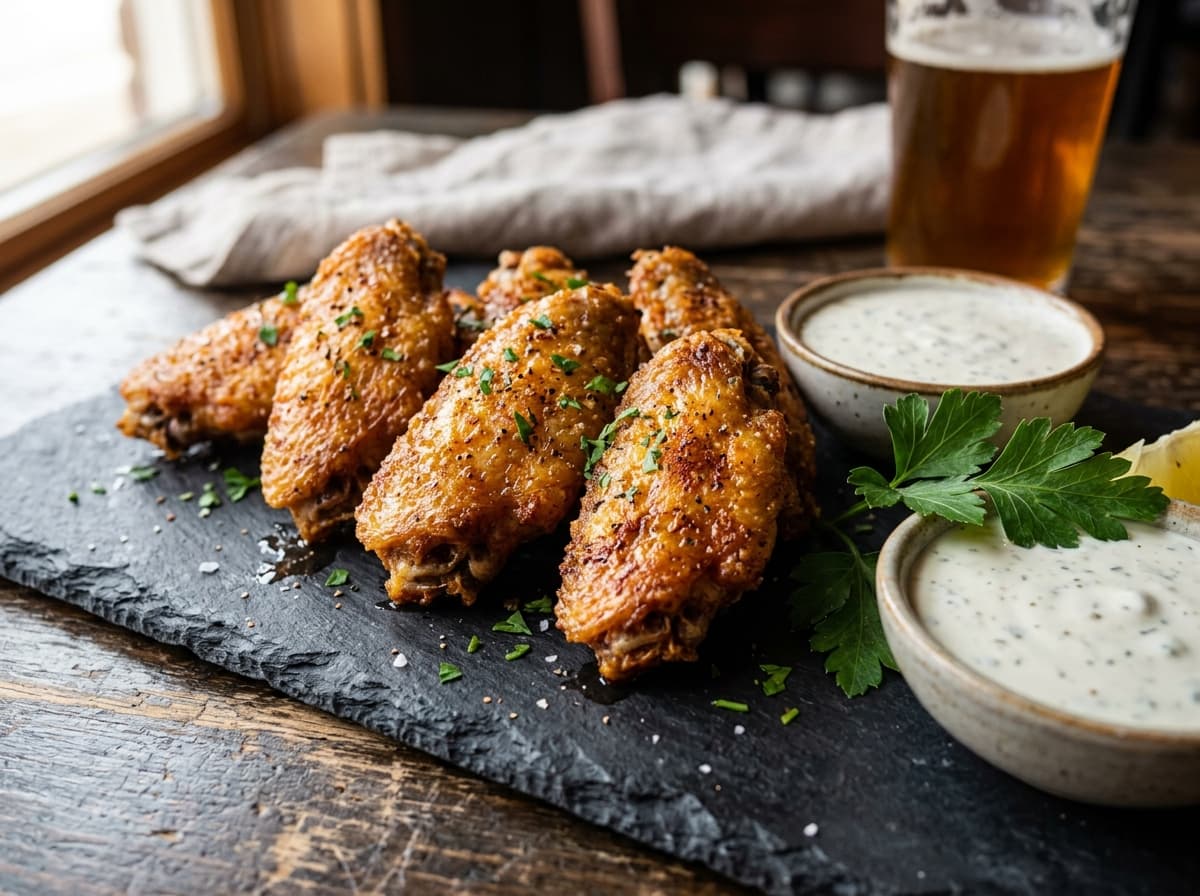
Flats (also known as wingettes) represent the middle anatomical section of the wing, supported by two parallel slender bones: the radius and the ulna. Because flats have cutaneous skin covering both the upper dorsal and lower ventral surfaces, they feature the highest surface-area-to-meat ratio of any poultry cut.
When exposed to dry convective heat or frying oil, this continuous outer skin renders its subcutaneous lipid layer into an exceptionally crispy exterior, while the internal connective tissue melts into rich gelatinous collagen.
Drumettes (Humerus Joint / Mini Poultry Leg)
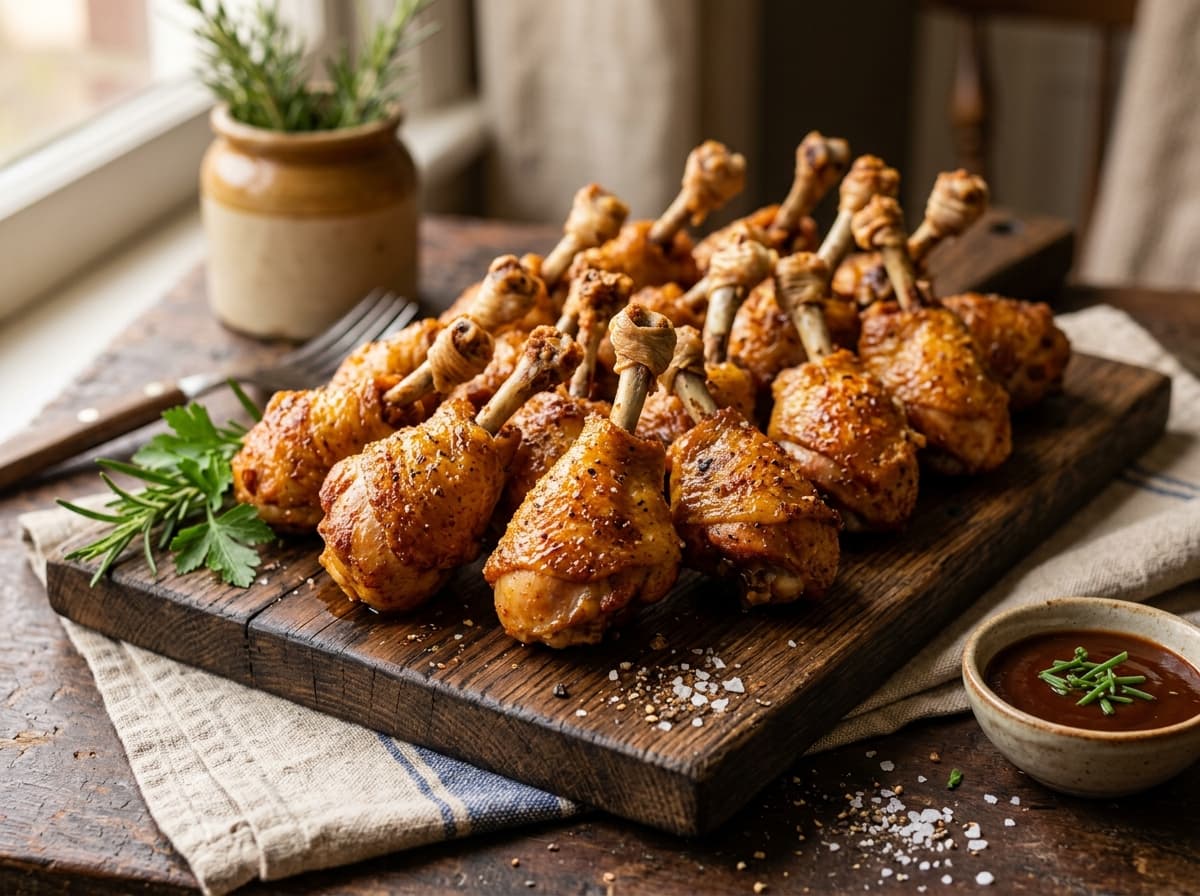
The drumette connects the chicken's wing to the shoulder girdle. It contains a single thick cylindrical bone (the humerus) enveloped in dense, darker muscle fibers with slightly higher concentrations of myoglobin.
Drumettes offer a lower non-edible bone tare percentage (approx. 44% bone tare vs 48% for flats), meaning each individual piece yields significantly more net edible meat (~27g vs ~21g). Because they have less exterior skin per ounce of meat, drumettes are slightly leaner than flats in total fat content.
Whole 3-Joint Wings (Drumette + Flat + Flapper Tip)
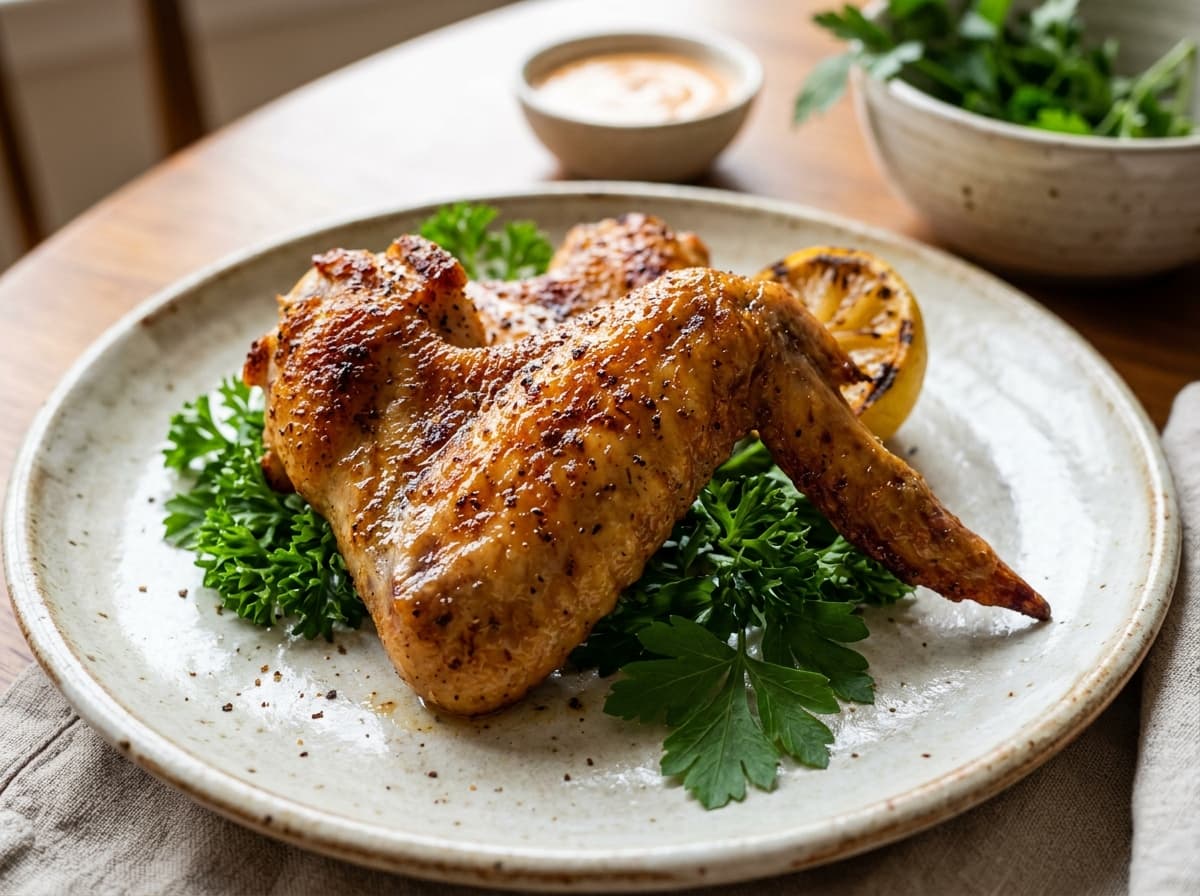
The complete unbroken chicken wing includes all three segments: the upper drumette, the mid-joint flat, and the terminal pointed flapper tip. This is the standard wholesale format sold in grocery family packs and butcher counters before restaurant processing.
The wing tip consists almost entirely of dense cartilage, tendons, and skin with negligible edible muscle tissue. While discarded by sports bars, the tip contains massive concentrations of collagen and gelatin, making it prized in bone broths, braises, and Asian culinary traditions.
Boneless Wings (Breaded Breast Meat Chunks)
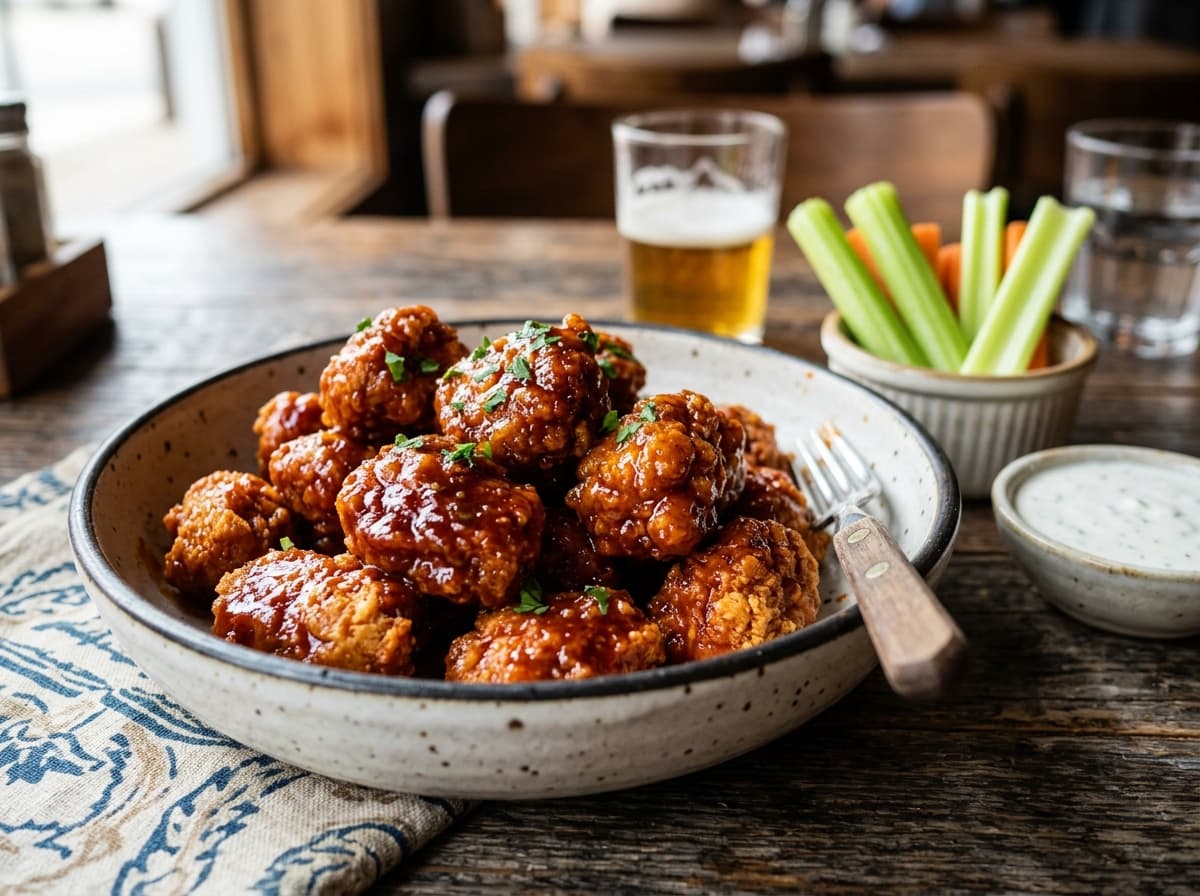
From a biological and anatomical standpoint, boneless wings are not wings. They are cut from the pectoralis major (chicken breast muscle), dredged in seasoned wheat flour or cornstarch batter, and fried.
Because they contain zero non-edible skeletal bones, 100% of the scale weight is consumed. However, the flour coating introduces 11g to 18g of carbohydrates per 100g, which absorbs frying oil and significantly elevates glycemic response compared to zero-carb bone-in wings.
Anatomical Comparison & Meat-to-Bone Yield Matrix
| Cut Type | Bone Tare % | Edible Meat / Pc | Skin-to-Meat Ratio | Carbs (Unsauced) | Best Cooking Technique |
|---|---|---|---|---|---|
| Flats (Wingettes) | ~48% | ~21g | Very High (Dorsal & Ventral) | 0g | Air Fryer / High-heat Oven Crisp |
| Drumettes | ~44% | ~27g | Moderate | 0g | Charcoal Grilling / Smoker |
| Whole 3-Joint | ~48% | ~48g | High (Includes Tip) | 0g | Slow Barbecue Roast / Rotisserie |
| Boneless Wings | 0% | ~32g | None (Flour Coating) | 11.5g | Deep Fryer / Convection Oven |
2. The 48% Skeletal Bone Tare Dilemma: How to Weigh Wings Accurately
The single most common mistake in fitness and calorie tracking apps is weighing a plate of whole bone-in chicken wings on a digital kitchen scale and logging the total gross weight as pure edible chicken meat. Doing so inflates recorded calories by nearly 100%.
Digital Scale Bone Tare Breakdown Visual Flowchart (500g Basket Example)
Whole cooked bone-in wings weighed straight from the basket onto your scale.
Skeletal humerus, ulna, and radius bones discarded in the clean bone bowl.
Real meat, crispy skin, and gelatin logged for calories and protein.
Method A: Pre-Meal Tare Mode (Fastest)
Weigh the entire plate of bone-in wings prior to taking your first bite. In this calculator, choose Digital Scale Mode and leave “Gross Scale Weight with Bones” selected. The mathematical engine automatically applies the 48% tare deduction and outputs exact edible nutrition.
Method B: Post-Meal Reverse Tare (Most Exact)
Weigh the loaded wing plate before eating (e.g. 480g). Place all stripped bones back onto the plate and weigh the residue when finished (e.g. 230g). Subtract residue from gross: 480g − 230g = 250g net edible meat. Select “Net Meat Only” in the calculator to record 250g.
3. Cooking Method Kinetics: Fat Absorption vs. Natural Rendering
Unlike lean poultry breast, which simply absorbs external cooking oil, chicken wing skin contains substantial subcutaneous fat. During thermal cooking, wings undergo a simultaneous two-way exchange: internal fat renders outward while cooking oil migrates inward:
| Method | Calories / 10 Wings | Fat (g) | Carbs (g) | Biochemical Mechanism |
|---|---|---|---|---|
| Oven Baked (400°F) | ~700 kcal | 49.9g | 0g | Internal fat renders into the baking pan over 40-50 min; no exogenous oil added. |
| Air-Fried (Convection) | ~740 kcal | 53.9g | 0g | High-velocity hot air crisps the skin rapidly. Requires zero or minimal oil spray (+8% kcal). |
| Deep-Fried Naked (Sports Bar) | ~875 kcal | 68.9g | 0g | Submerged in 375°F frying oil. Skin absorbs roughly 3.5g cooking oil per 100g (+25% kcal). |
| Deep-Fried Breaded / Battered | ~1,060 kcal | 77.3g | 38g | Flour coating acts as a lipid sponge, retaining frying oil and adding significant refined starch carbs. |
| Charcoal / Gas Grilled | ~660 kcal | 44.9g | 0g | Rendered lipid melts freely through open grates, yielding the leanest skin-on finish (-6% kcal). |
4. The Hidden Macro Avalanche: How Sauces Transform Zero-Carb Wings
Unbreaded plain chicken wings contain exactly 0 grams of carbohydrates. However, the commercial sauce toss is where unsuspecting food loggers consume the caloric equivalent of an extra meal:
Aged cayenne peppers, vinegar, and melted butter. Virtually zero carbs (<0.4g/wing), but packs 260mg sodium/wing.
Brown sugar, molasses, and tomato paste glaze. Adds over 7.4g pure sugar per wing (approx. 18 teaspoons of sugar per dozen).
Honey, soy sauce, and cornstarch reduction. Thick sticky glaze adheres heavily to skin, packing 10.4g carbs per wing.
5. The Dipping Sauce Factor: Ranch vs. Blue Cheese vs. Fresh Veggie Sticks
A typical sports bar wing platter arrives with 2 to 3 plastic ramekins of dressing. Here is how standard 2 tbsp (30g) dipping portions compare:
Buttermilk Ranch
14.2g Fat • 2.1g Carbs • 260mg Sodium (per 2 tbsp). High omega-6 soybean oil base.
Chunky Blue Cheese
16.0g Fat • 1.5g Carbs • 310mg Sodium (per 2 tbsp). Rich in aged cheese curd cultures.
Celery & Baby Carrots
0.2g Fat • 6.2g Carbs • 65mg Sodium (80g basket). High fiber and potassium to balance sodium.
6. Bone-In Wings vs. “Boneless Wings”: The Biochemical Reality
In 2024, an Ohio Supreme Court ruling made national headlines affirming that consumers cannot reasonably expect “boneless wings” to be free of anatomical bones. More fundamentally from a nutritional standpoint: boneless wings are not wings at all.
- • Sourced from the wing joint (humerus, ulna, and radius bones).
- • Naturally zero carbohydrates prior to saucing.
- • Rich in bioavailable type I and type II collagen peptides.
- • 44% to 48% non-edible skeletal bone tare weight.
- • 100% compliant with strict Ketogenic, Carnivore, and Paleo diets.
- • Sourced from breast muscle (pectoralis major), not wing joints.
- • Coated in seasoned wheat flour or cornstarch prior to frying.
- • Delivers 11g to 18g of refined starch carbohydrates per serving.
- • 0% bone tare — 100% of scale weight is edible meat.
- • Ideal for high-protein bodybuilding; not suitable for zero-carb ketosis.
7. Super Bowl & Gameday Catering Math: How Many Pounds to Buy
Planning a wing platter requires calculating both skeletal bone tare (48%) and cooking shrinkage (~25%). If you buy 10 lbs of raw bone-in wings, you will finish with roughly 7.5 lbs of cooked wings, containing only 3.9 lbs of net edible meat.
| Guest Count | Light Buffet (5 wings/ea) | Standard Dinner (9 wings/ea) | Game Day Feast (14 wings/ea) | Sauce Bottles Needed |
|---|---|---|---|---|
| 4 Guests | 2.0 lbs (20 wings) | 3.6 lbs (36 wings) | 5.6 lbs (56 wings) | 1 to 2 bottles (12 oz) |
| 8 Guests | 4.0 lbs (40 wings) | 7.2 lbs (72 wings) | 11.2 lbs (112 wings) | 2 to 3 bottles (12 oz) |
| 12 Guests | 6.0 lbs (60 wings) | 10.8 lbs (108 wings) | 16.8 lbs (168 wings) | 3 to 4 bottles (12 oz) |
| 20 Guests | 10.0 lbs (100 wings) | 18.0 lbs (180 wings) | 28.0 lbs (280 wings) | 6 to 8 bottles (12 oz) |
8. Keto, Carnivore & Low-FODMAP Wing Protocols
Chicken wings are naturally one of the most compliant foods for low-carbohydrate ketogenic and carnivore regimens due to their 1:1 macro ratio of fat to protein:
Ketogenic & Carnivore Best Practices
Select unbreaded, skin-on wings baked, air-fried, or deep-fried in tallow or avocado oil. Choose Classic Buffalo (cayenne + butter), Lemon Pepper Dry Rub, or Garlic Parmesan. Avoid BBQ, teriyaki, sweet chili, and honey garlic completely, which quickly trigger insulin spikes.
Low-FODMAP & IBS Protocols
Standard buffalo sauces and ranch dressings contain dehydrated garlic and onion powder (high fructans). For irritable bowel syndrome or SIBO, season unbreaded wings with simple sea salt, black pepper, and garlic-infused olive oil (fructans are water-soluble, not oil-soluble) or freshly squeezed lemon juice.
9. Food Safety, Thermal Thresholds & Crispy Reheating
The USDA FSIS mandates cooking poultry to a minimum internal temperature of 165°F (74°C). However, because wings are packed with joint connective tissue, cooking wings to 175°F to 185°F melts tough collagen into rich liquid gelatin, creating tender, fall-off-the-bone meat without drying out.
Microwaving leftover wings turns the skin soggy and rubbery. Instead, re-crisp using convection:
- Air Fryer: Preheat to 375°F. Cook for 4 to 5 minutes until skin re-sizzles.
- Oven Broiler: Place wings on a wire rack at 400°F for 8 minutes, flipping once halfway through.
10. Frequently Asked Questions & USDA Citations
How many calories are in 10 chicken wings with buffalo sauce?
A standard basket of 10 bone-in chicken wings tossed in classic buffalo sauce averages 940 to 1,000 calories if deep-fried naked, and approximately 760 to 820 calories if oven-baked or air-fried without oil. If you add 2 tablespoons of ranch or blue cheese dip, add an extra 140 to 155 calories.
How much edible protein is actually in one chicken wing?
A single cooked bone-in wing piece yields approximately 6.5 to 9.5 grams of high-quality complete protein depending on anatomical cut (a drumette provides ~9.8g protein, whereas a flat provides ~8.5g protein). A 10-piece basket delivers 85g to 98g of total protein.
Do chicken wings have zero carbs?
Yes, unbreaded plain or buffalo chicken wings contain 0 grams of natural carbohydrates. Carbohydrates are introduced only when wings are dusted in flour or cornstarch prior to frying (breaded wings add ~3.8g carbs/wing) or when tossed in sugar-heavy glazes such as barbecue, teriyaki, or honey garlic (+8g to +10g carbs/wing).
Why do restaurant chicken wings have so much sodium?
Commercial restaurant wings are frequently wet-brined or needle-injected with a phosphate-salt solution before freezing, and then tossed in cayenne pepper hot sauces or glazes that carry 200mg to 300mg of sodium per wing. Consuming 10 restaurant wings commonly yields 2,400mg to 3,200mg of sodium, surpassing the entire FDA 2,300mg daily recommendation in a single meal.
Are flats (wingettes) healthier than drumettes?
Drumettes are marginally leaner than flats: they contain slightly more muscle tissue and less surface skin, averaging about 19.2g fat vs 22.4g fat per 100g edible meat. However, flats contain greater amounts of beneficial joint collagen and connective tissue.
How much weight do wings lose when cooked?
Raw chicken wings lose approximately 22% to 28% of their total raw weight during cooking due to water evaporation and rendered fat liquefaction. Thus, 1 pound (454g) of raw wings yields approximately 0.75 pounds (340g) of cooked wings.
1. U.S. Department of Agriculture, Agricultural Research Service. FoodData Central: Chicken, wing, meat and skin, cooked (NDB 05100) and Chicken, wing, meat only, cooked (NDB 05101).
2. National Chicken Council (NCC). Annual Wing Report: Consumption Trends, Gameday Super Bowl Statistics & Cut Anatomy (2024).
3. USDA Food Safety and Inspection Service (FSIS). Safe Internal Cooking Temperatures for Poultry Products.