Chicken Breast vs. Wings Nutrient Matrix
Compare skinless breast against wing meat + skin by portion size or wing count. Informational only — not medical advice.
Standard logging pairing. Roasted skinless breast lists ~31 g protein and ~165 kcal per 100 g. Roasted wings with skin list ~24 g protein, ~254 kcal, and ~17 g fat — most extra calories come from skin fat in USDA tables.
Nutrient breakdown (100 g edible portion)
USDA FDC 171477 (breast) & 173630 (roasted wings)| Nutrient | Unit | Breast | Wings | Variance | Higher in |
|---|---|---|---|---|---|
| Energy / Calories | kcal | 165 | 254 | -35% | Breast |
| Protein | g | 31 | 23.8 | +30% | Breast |
| Protein per 100 kcal | g | 18.8 | 9.4 | Breast ~2× | Breast |
| Total Fat | g | 3.6 | 16.9 | -79% | Breast |
| Saturated Fat | g | 1 | 5 | -80% | Breast |
| Monounsaturated Fat | g | 1.2 | 7.7 | +542% | Wings |
| Polyunsaturated Fat | g | 0.8 | 3.6 | +350% | Similar |
| Iron (FDC total) | mg | 1.04 | 0.84 | +24% | Breast |
| Zinc | mg | 1 | 1.64 | +64% | Wings |
| Vitamin B12 | mcg | 0.34 | 0.35 | Similar | Similar |
| Niacin (Vitamin B3) | mg | 13.7 | 6.3 | +117% | Breast |
| Sodium (unseasoned FDC) | mg | 74 | 98 | +32% | Breast |
| Leucine (FDC amino acid) | g | 2.3 | 2 | +15% | Breast |
| Collagen (literature est.) | g | 1.2 | 6.5 | +442% | Wings |
| Inedible bone waste | % raw weight | 0% | 38% | Breast boneless | Breast |
| Est. cost per 30 g protein | $ USD | 0.9 | 1.25 | Breast cheaper | Breast |
Skin-to-Meat Ratio & Surface Area
Why wings log far more fat per 100 g than skinless breast
- •Anatomy: Breast is a large block of skinless muscle (~0% skin in FDC 171477). Wings are small joints with meat + skin (FDC 173630) — skin fat drives the calorie gap.
- •Fat column: Roasted wings list ~16.9 g total fat vs ~3.6 g in breast per 100 g. Roughly 60% of wing calories come from fat grams in USDA tables.
- •Surface area: Wings have more skin relative to meat volume than breast, which changes texture when baked or air-fried — a kitchen note, not a nutrient ranking.
- •Bone waste: Raw bone-in wings often yield ~35–40% inedible bone and cartilage by weight. Breast is boneless with ~100% edible yield — affects cost per gram of protein logged.
Skin, Fat & Yield: Breast vs. Wings
Breast is skinless muscle with minimal fat. Wings include skin and joint tissue, which raises fat and calories per 100 g in USDA tables.
Skinless breast logs about 2× the protein per calorie — the main reason breast wins on tight calorie budgets.
Wing skin carries most of the extra fat grams. FDC 173630 reflects roasted meat + skin, not sauced or deep-fried wings.
Log the cut and cooking method you ate. Fried wings (FDC 173629) list even higher fat than roasted.
Raw wings include ~35–40% bone and cartilage by weight — affects true cost per gram of protein logged.
Breast vs. Wings at a Glance
Eight parameters for food logging. Primary numbers from FDC 171477 (breast) and 173630 (roasted wings) unless noted.
| Parameter | Chicken Breast | Chicken Wings |
|---|---|---|
| Protein per 100 kcal (FDC) | 18.8 g / 100 kcal | 9.4 g / 100 kcal (roasted) |
| Calories & fat (FDC) | 165 kcal · 3.6 g fat | 254 kcal · 16.9 g fat (roasted) |
| Skin content | 0% skin (skinless entry) | Meat + skin (FDC entry) |
| Collagen (literature est.) | ~1.2 g / 100 g | ~6.5 g / 100 g |
| Bone waste (raw weight) | 0% (boneless) | ~35–40% inedible |
| Iron & zinc (FDC) | 1.04 mg Fe · 1.0 mg Zn | 0.84 mg Fe · 1.64 mg Zn |
| Niacin (FDC) | 13.7 mg / 100 g | 6.3 mg / 100 g |
| Sodium (unseasoned FDC) | 74 mg / 100 g | 98 mg / 100 g |
When breast fits the log
Maximum protein per calorie, lowest fat, full edible yield, and higher niacin per 100 g.
When wings fit the log
Crispy skin, richer mouthfeel, and higher zinc per 100 g — log roasted or fried FDC entry to match how they were cooked.
Weigh edible meat + skin
Exclude bones from your scale weight. One whole wing is ~30–35 g edible when cooked — piece counts are rough estimates.
Collagen, Niacin & Boneless-Wing Notes
Niacin is a standard USDA column. Collagen is a literature estimate. Restaurant boneless wings are usually breast meat — a separate log entry.
Skin & joint collagen
Wing skin and joints carry more connective tissue than breast muscle. Literature often cites ~5–7 g collagen per 100 g edible wing vs ~1 g in breast — not a USDA FDC field. Log only if your app tracks specialty amino acids.
Niacin (vitamin B3)
Roasted breast lists ~13.7 mg niacin per 100 g vs ~6.3 mg in roasted wings (FDC). Niacin is a standard B-vitamin column in food logs. A 150 g breast portion logs ~20.6 mg niacin.
Boneless wings ≠ wing meat
Most restaurant “boneless wings” are breaded breast chunks fried in oil — closer to nuggets than FDC 173630 roasted wings. Log breaded fried chicken separately; do not use the wing FDC entry for boneless menu items.
Wing Cuts, Cooking & Logging Tips
Visual guide to wing pieces plus practical cooking notes for accurate food logs.
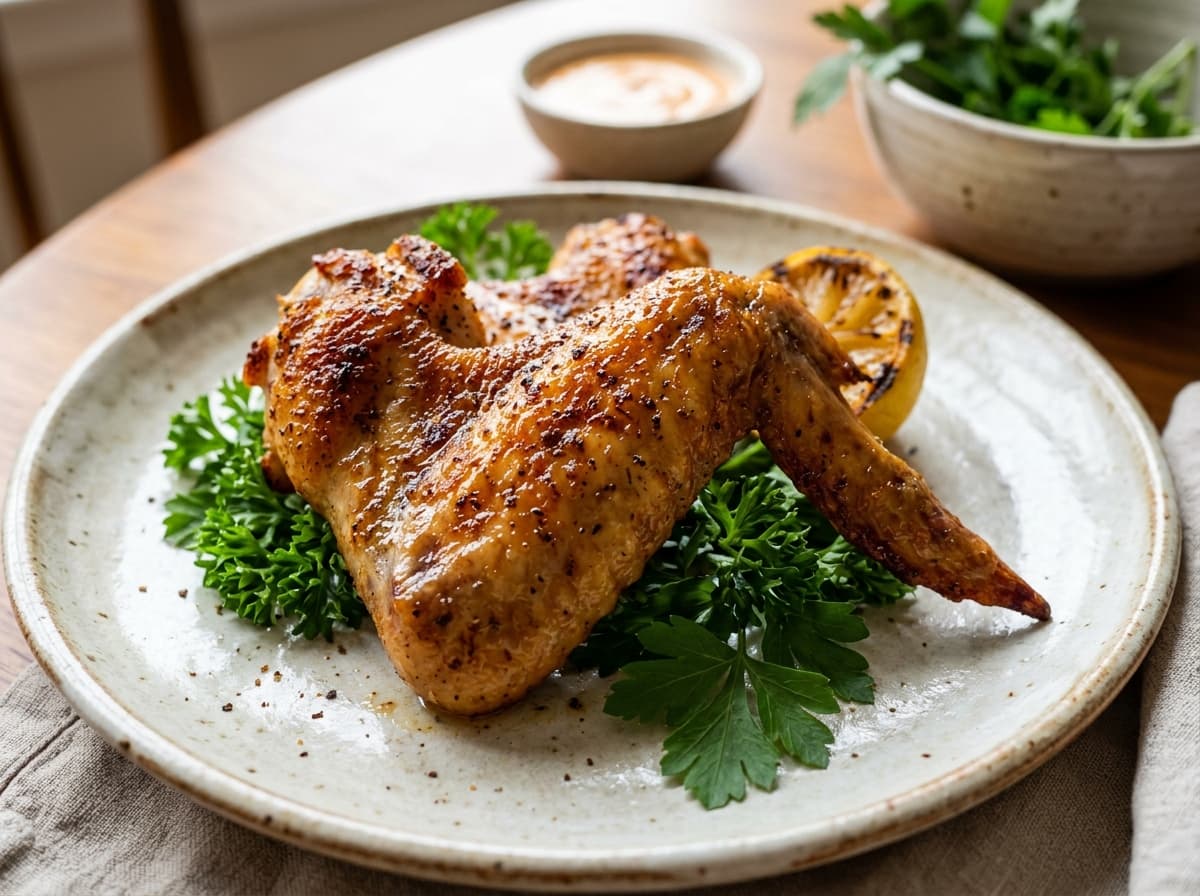
Whole Wing
Complete wing segment with skin and joints. ~30–35 g edible meat + skin when cooked.
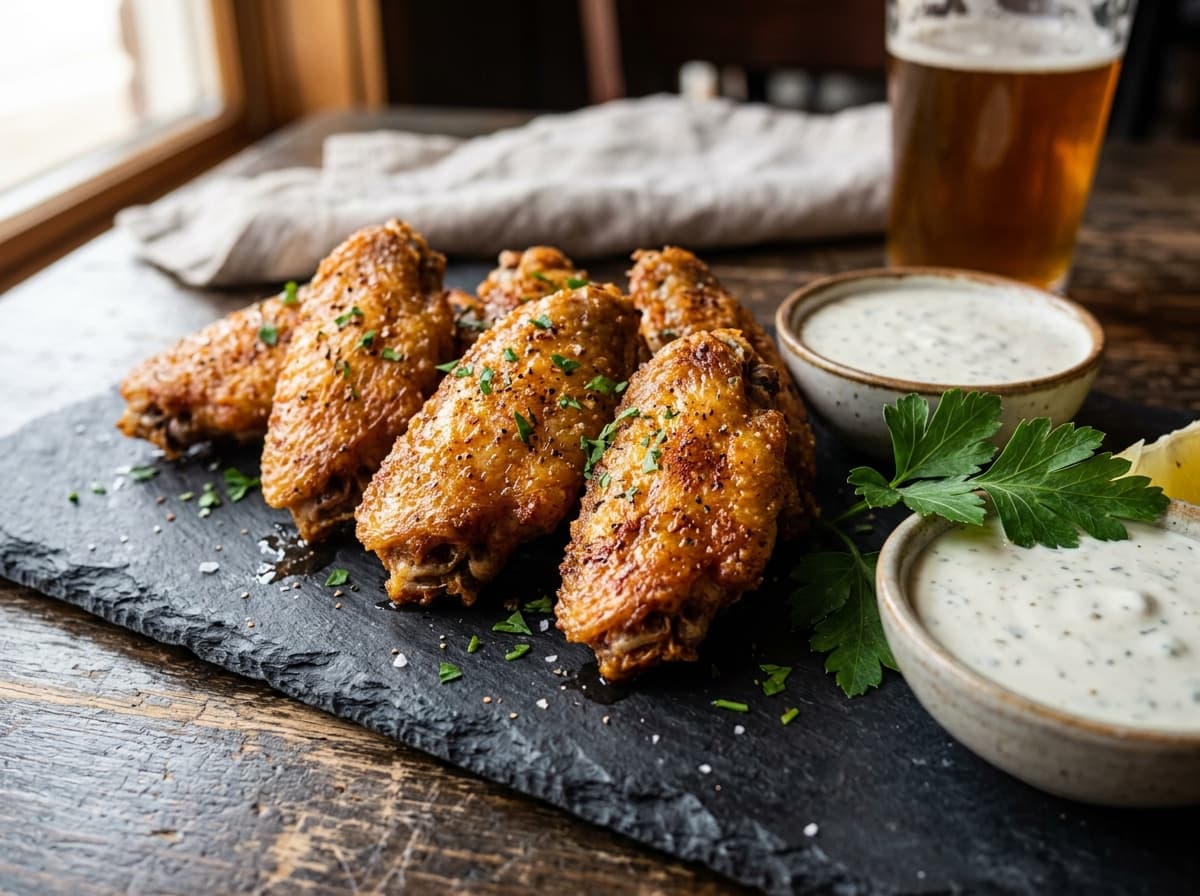
Wing Flats
Higher skin-to-meat ratio — crisps well when baked or air-fried on a rack.
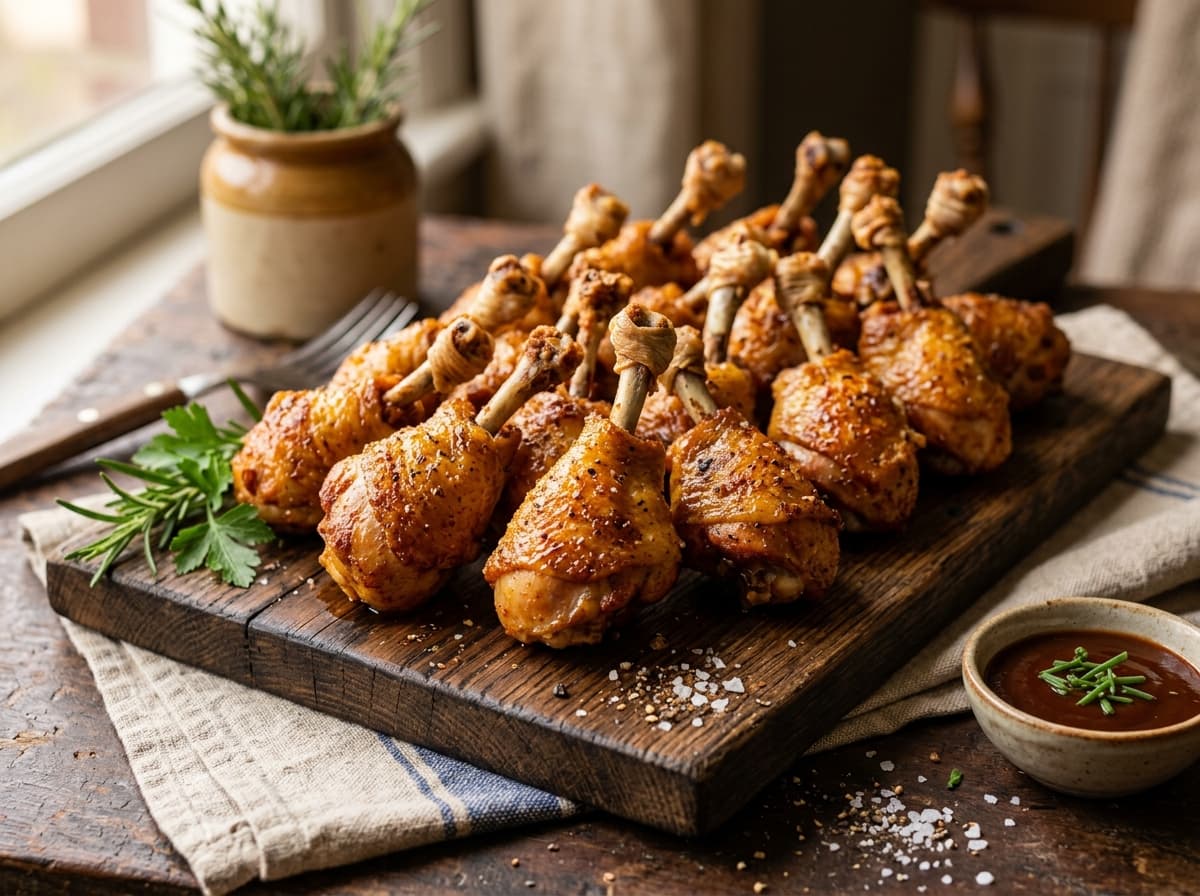
Drumettes
Slightly more meat per piece than flats; still includes skin and joint tissue.
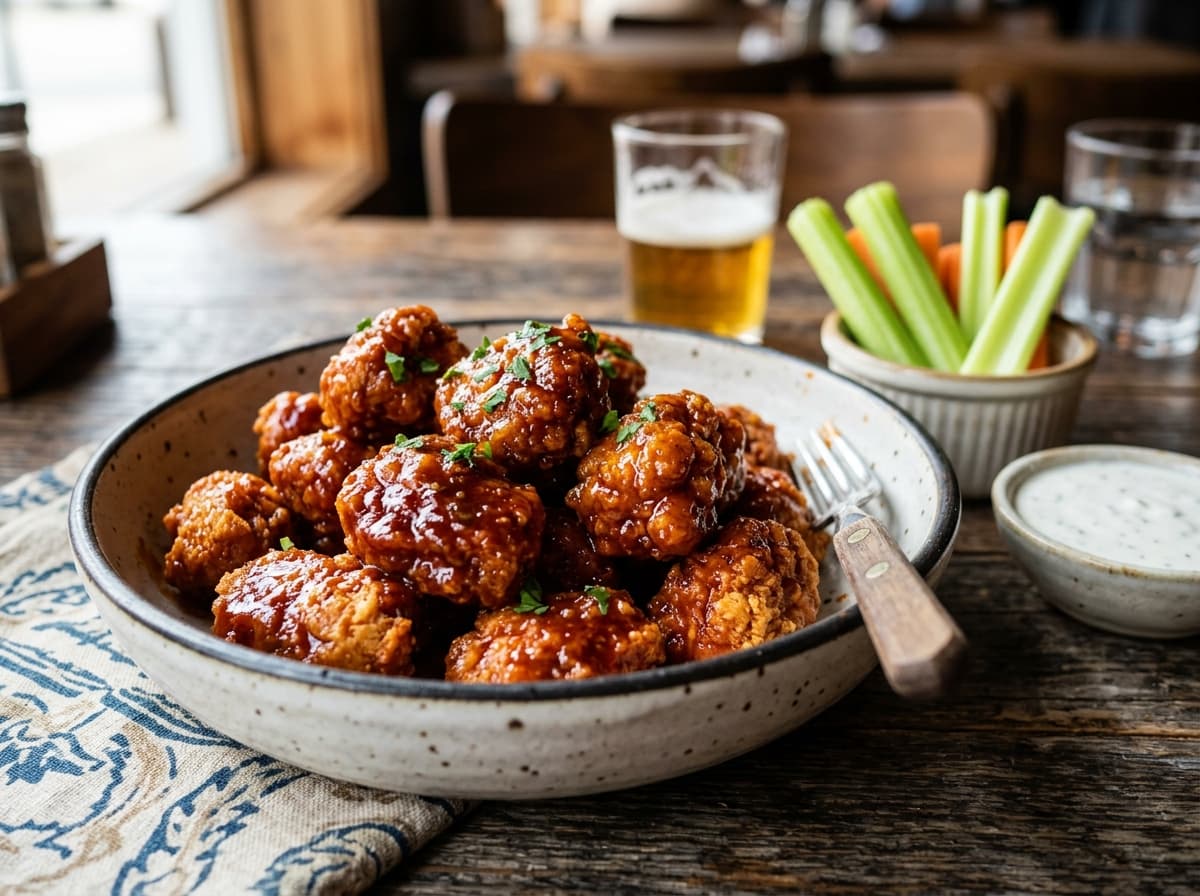
Boneless "Wings"
Breaded breast meat — log as fried nuggets, not as FDC roasted wings.
USDA safe internal temperature
USDA FSIS recommends cooking poultry to 165 °F (74 °C) internal temperature, checked with a food thermometer. This is a food-safety reference — not personal dietary advice.
Crispy roasted wings at home
Bake or air-fry on a wire rack at ~400–425 °F (200–220 °C) so skin fat renders downward. A light coat of baking powder and salt can help the skin dry and crisp. Log cooked edible weight with FDC 173630 (roasted wings).
Breast pull-and-rest
Many cooks pull skinless breast from heat at 160–162 °F and rest 5–8 minutes so carryover heat finishes the cook. Log the cooked portion you serve.
Sauce & sodium logging
Plain roasted wings list ~98 mg sodium per 100 g (FDC). Buffalo butter sauce, BBQ glaze, and ranch add fat and sodium not in the base entry — log sauces separately when your journal supports it.
When to Log Breast vs. Wings
Choose based on which journal columns you are filling — not on one cut being universally better.
Log breast when…
- Protein per calorie matters: ~18.8 g per 100 kcal vs ~9.4 g in roasted wings (FDC).
- Fat grams stay low: ~3.6 g total fat and ~1.0 g saturated fat per 100 g.
- Full edible yield: boneless breast has no bone waste; wings lose ~35–40% to bone.
- Niacin column: ~13.7 mg per 100 g vs ~6.3 mg in wings.
Log wings when…
- You ate skin-on wing meat: use FDC 173630 (roasted) or 173629 (fried).
- Zinc column leads: ~1.64 mg per 100 g vs ~1.0 mg in breast.
- Texture preference: crispy skin and richer mouthfeel — a logging choice, not a ranking.
- Optional collagen notes: literature estimates higher connective tissue in wings — not a USDA field.
Frequently Asked Questions
Common questions about logging chicken breast vs wings. Informational only — not medical advice.
Scientific Citations & USDA Records
Nutrient estimates and comparison notes are anchored to the verified studies and food-composition records below. For journaling only — not medical advice.
Chicken, broilers or fryers, breast, meat only, cooked, roasted
U.S. Department of Agriculture, ARS
FDC 171477
Key finding: SR Legacy roasted breast: ~165 kcal, 31 g protein, 3.6 g fat, 1.0 g saturated fat, 1.04 mg iron, 1.0 mg zinc per 100 g.
Chicken, broilers or fryers, wing, meat and skin, cooked, roasted
U.S. Department of Agriculture, ARS
FDC 173630
Key finding: SR Legacy roasted wing (meat + skin): ~254 kcal, 23.8 g protein, 16.9 g fat, 5.0 g saturated fat, 0.84 mg iron, 1.64 mg zinc per 100 g.
Chicken, broilers or fryers, wing, meat and skin, cooked, fried, flour
U.S. Department of Agriculture, ARS
FDC 173629
Key finding: SR Legacy flour-fried wings: ~321 kcal, 26.1 g protein, 22.2 g fat per 100 g — use when logging fried restaurant-style wings.
Important roles of dietary taurine, creatine, carnosine, anserine and 4-hydroxyproline in human nutrition and health
Wu, G.
10.1007/s00726-020-02823-6 · PMID 32072297
Key finding: Reviews amino acids and peptides in meat including collagen-related 4-hydroxyproline — context for optional specialty columns not listed in USDA FDC macro tables.
Relationship between the concentration of myoglobin and parvalbumin in various types of muscle tissues from chickens
Reiser, R. F., et al.
10.1080/00071668508416792 · PMID 3918769
Key finding: Documents muscle-type differences across chicken cuts — useful background for why wing and breast meat differ in color and composition.
Related comparisons
Other food-logging breakdowns in this series
Related Tools
Explore more nutrition tools to help you reach your goals
Informational & journaling tool only — not medical advice
Nutrient figures come from USDA FoodData Central (FDC 171477 roasted breast, FDC 173630 roasted wings, FDC 173629 fried wings) and peer-reviewed food-composition literature. Values vary by cooking method, sauces, and portion weighing. Collagen figures are literature estimates — not standard USDA fields. This tool is for food logging and personal awareness only.