Configure Broth & Preparation
Format, volume units, sauce reduction, and multi-mug logging
Broth Logging Results
USDA FoodData Central referenced
Swanson 100% Natural Chicken Broth • 8 fl oz (237 ml)
Sodium content per 1 standard cup (8 fl oz / 240 ml) across popular grocery store cartons, canned broths, and bouillon bases:
| Brand / Format | Calories | Protein | Sodium / Cup | FDA % DV |
|---|---|---|---|---|
| Swanson 100% Natural Chicken Broth(Active) | 15 | 1.5g | 860 mg | 37% |
| Swanson 33% Less Sodium Chicken Broth | 15 | 1.5g | 570 mg | 25% |
| Swanson Unsalted (No Added Salt) | 15 | 1.5g | 45 mg | 2% |
| Pacific Foods Organic Low Sodium Free Range Broth | 10 | 2g | 450 mg | 20% |
| Trader Joe's Organic Low Sodium Chicken Broth | 15 | 2g | 140 mg | 6% |
| Campbell's Condensed Chicken Broth (Prepared 1:1) | 15 | 1.2g | 650 mg | 28% |
| Better Than Bouillon Roasted Chicken Base (1 tsp / 6g) | 15 | 1g | 680 mg | 30% |
| Knorr Chicken Bouillon Cube (1 Cube / 4g Reconstituted) | 10 | 0.5g | 900 mg | 39% |
| Homemade Simmered Broth (Lightly Salted) | 20 | 2.5g | 280 mg | 12% |
| Homemade Rich Golden Broth (Unskimmed with Natural Fat) | 35 | 2.8g | 250 mg | 11% |
| Simmered Chicken Bone Broth (12-24h Collagen Extraction) | 45 | 9g | 380 mg | 17% |
Informational & journaling tool only — not medical advice
This calculator estimates USDA FoodData Central and published store-label values for personal food logging. It is not a substitute for professional guidance. We are not doctors and do not provide medical, diagnostic, or treatment advice.
Chicken Broth, Stock & Bone Broth: USDA Label Data
Log calories, sodium, and protein from poultry liquids using USDA FoodData Central entries and store nutrition labels. Broth, stock, bone broth, and bouillon differ by simmer time, bone content, and sodium added during processing.
Broth vs. Stock vs. Bone Broth vs. Bouillon
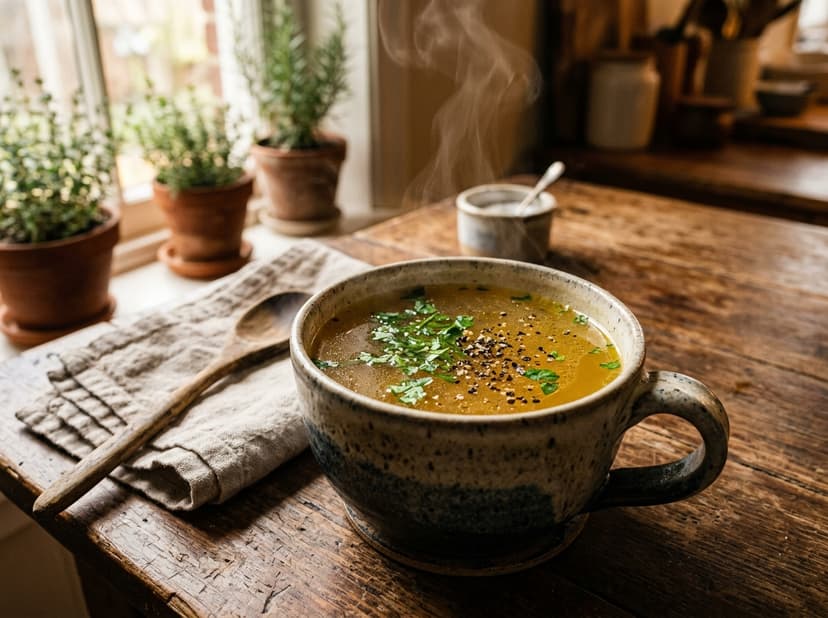
Chicken Broth (1–2 hour simmer)
Simmered from meat and light bones. Clear, thin liquid. ~15 kcal, ~1.5g protein, ~860mg sodium (commercial) per cup per USDA.
Common use: Soups, grain cooking, light sipping
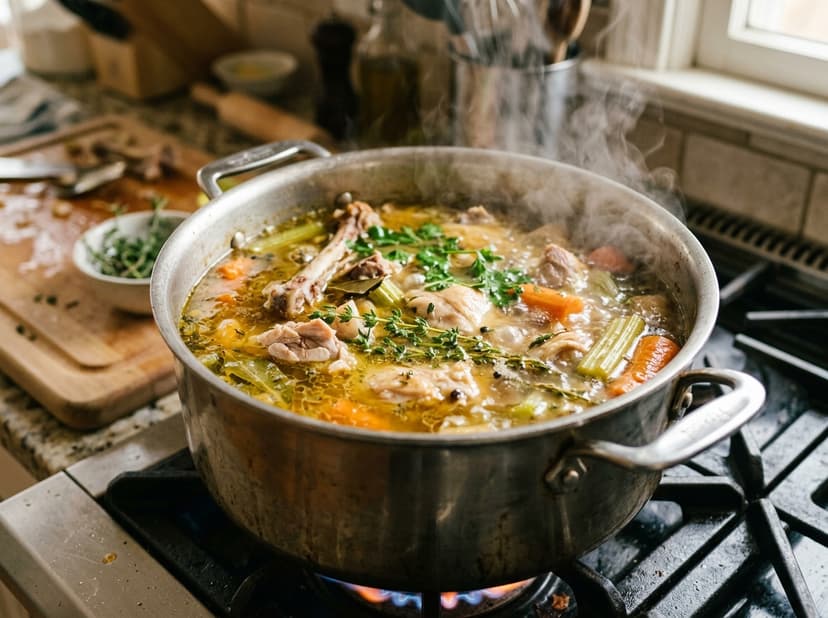
Chicken Stock (3–5 hour simmer)
Made from roasted bones and aromatics. More gelatin body. ~30 kcal, ~4g protein per cup. Chills to soft gel.
Common use: Pan sauces, gravies, risotto, braises
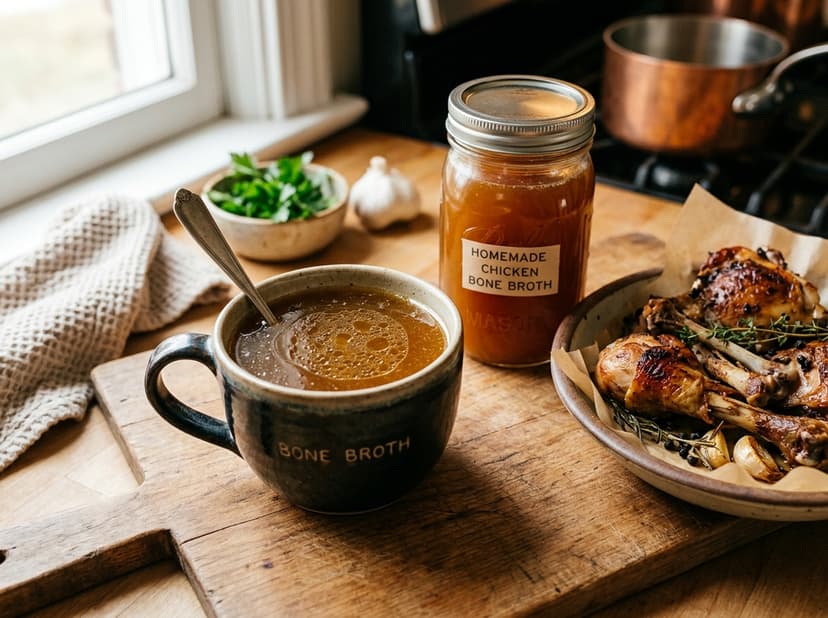
Chicken Bone Broth (12–24+ hours)
Long extraction with joints and acid. ~45 kcal, ~9g protein (collagen peptides) per cup. Solidifies when chilled.
Common use: Warm sipping, high-protein journal entries
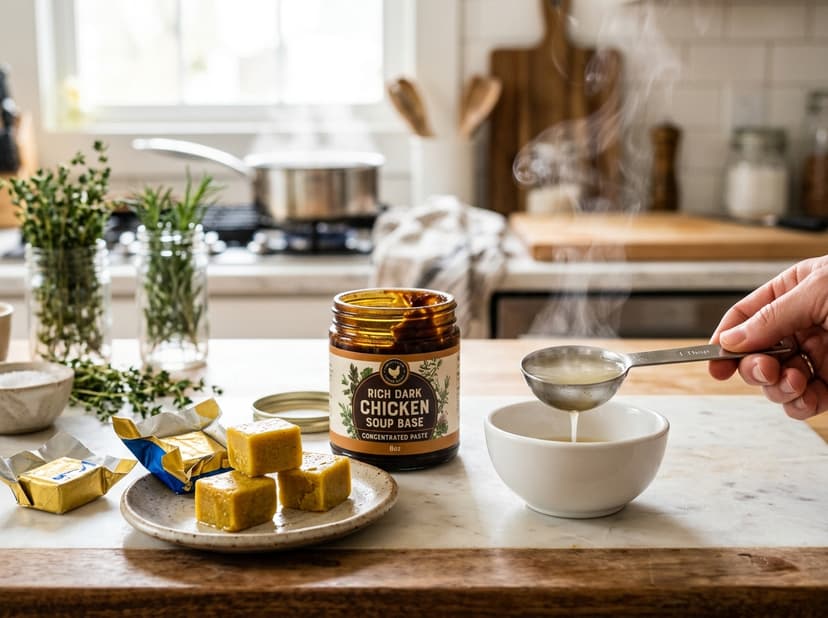
Bouillon Cubes & Paste
Dehydrated concentrate — high salt (~680–950mg sodium per reconstituted cup). Minimal collagen.
Common use: Pantry flavor booster; log sodium carefully
| Format | Simmer | Calories | Protein | Sodium (avg) |
|---|---|---|---|---|
| Chicken Broth | 1–2 hr | 15 kcal | 1.5g | 860 mg |
| Chicken Stock | 3–5 hr | 30 kcal | 4.0g | 500 mg |
| Bone Broth | 12–24 hr | 45 kcal | 9.0g | 380 mg |
| Bouillon (reconstituted) | Instant | 15 kcal | 1.0g | 680–950 mg |
Commercial vs. Low-Sodium vs. Unsalted
Sodium is the main variable when logging broth. FDA Daily Value for sodium on labels is 2,300mg.
Why Simmering Down Broth Concentrates Sodium
When making pan sauces or glazes, water evaporates but sodium stays in the pot. Reducing 4 cups of regular broth (860mg/cup) to 1 cup yields ~3,440mg sodium per cup — use unsalted broth for reductions and season at the end.
Skimmed vs. Unskimmed Broth
USDA Micronutrients (per cup, typical)
Leftover Broth Storage
- Cool hot broth in an ice bath before refrigerating (USDA FSIS guidance).
- Homemade broth: use within 3–4 days refrigerated; opened cartons 4–5 days.
- Freeze in 1-cup portions for up to ~6 months.
Frequently Asked Questions
How many calories in 1 cup of chicken broth?
Standard commercial broth: ~10–15 kcal/cup. Skimmed homemade ~15–20 kcal; unskimmed with fat ~35 kcal per USDA estimates.
How much sodium in regular vs low-sodium broth?
Regular ~860mg/cup (37% FDA DV). Low-sodium ~450–570mg. Unsalted ~40–70mg naturally occurring sodium.
How do I log multiple mugs of broth?
Use Multi-Mug Log mode: enter mug count and size to total calories, sodium, and fluid volume for your diary entry.
Is chicken broth high in protein?
Standard broth ~1.5–2g protein/cup. Bone broth ~8–10g/cup from long collagen extraction.
Can bouillon substitute for broth in recipes?
Yes — 1 cube or 1 tsp paste + 1 cup water ≈ 1 cup broth. Bouillon is higher in sodium (~900mg/cup); reduce added salt in the recipe.
- USDA FoodData Central: Soup, chicken broth, ready-to-serve (FDC #171565); low sodium canned (NDB 06480).
- FDA: Daily Value for sodium on Nutrition Facts labels (2,300mg reference).
- USDA FSIS: Safe storage and cooling guidance for cooked liquids.