Tender Configuration
Select preparation, brand & sauces
4 × Fast Food Average (44g / 1.5 oz) (Deep-Fried)
Deep-Fried (Traditional Buttermilk Battered)
Nutritional Insight: Dipping your tenders in 1 × Cane's Sauce (1.5 oz tub (43g)) adds 19g of fat (39% of total fat) and 580mg of sodium. For fat loss, consider alternating with zero-calorie hot sauce or dipping the tip of each tender rather than submerging.
Heavy dipping sauce and batter. More than 60% of calories come from fat and sugar.
Anatomical Architecture & Preparation Styles
From whole-muscle tenderloins to buttermilk-crusted deep frying, discover how anatomical cuts, starches, and cooking temperatures transform chicken tenders into vastly different nutritional profiles.
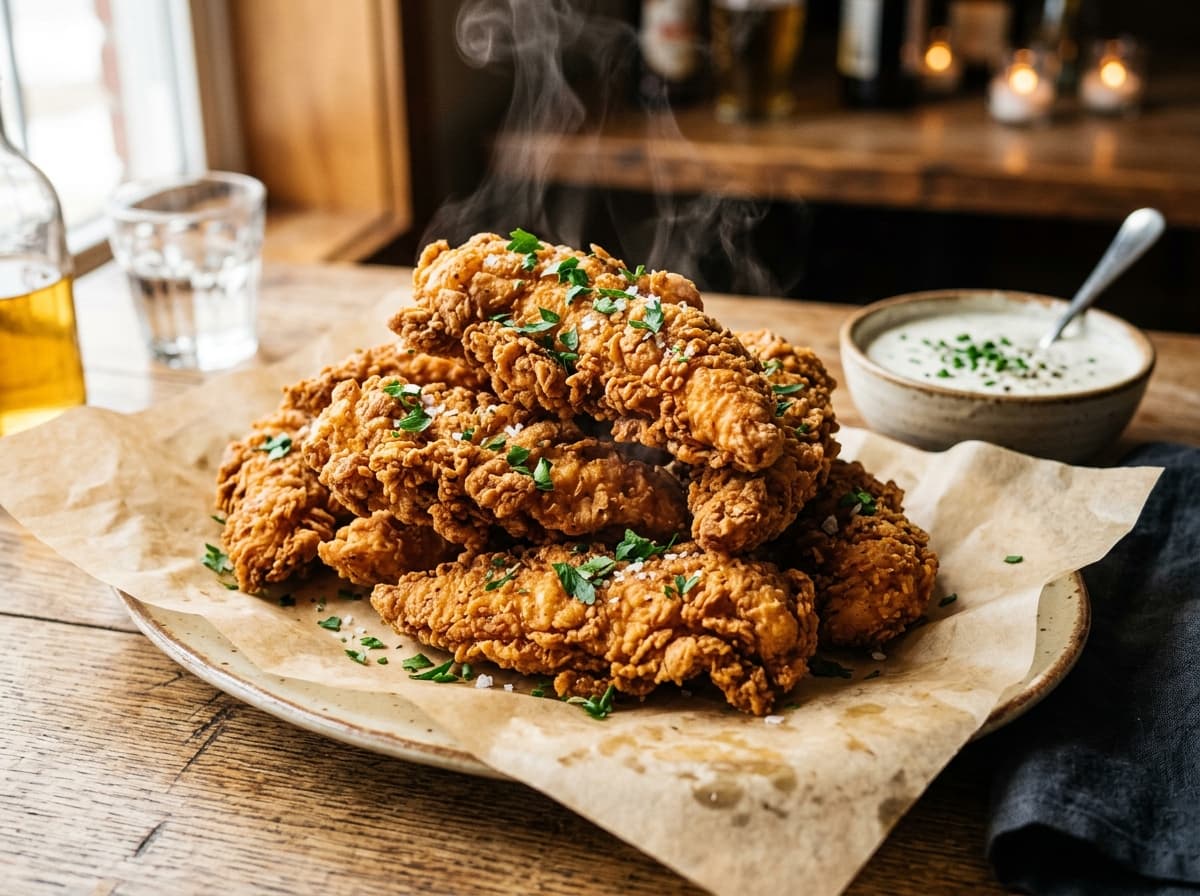
1. Traditional Buttermilk Fried Chicken Tenders
290 kcal / 100g • Maximum CrunchThe quintessential Southern and fast-food tender begins with seasoned whole-muscle chicken marinated in an acidic buttermilk bath. The tender is dredged through seasoned flour and submerged in 350°F (177°C) hot oil. As moisture vaporizes from the meat, steam pushes out, creating crunchy crags while oil is absorbed into the outer starch crust. A 4-piece order delivers ~380–450 kcal, 22g fat, and 24g carbs.
2. Anatomy of the Pectoralis Minor (Naked Tenderloin)
True chicken tenders are not breast scraps—they are anatomically the Pectoralis minor, an inner pectoral strip nestled directly underneath the breast along the breastbone (keel bone). Because chickens are flightless, this inner muscle performs virtually no high-stress mechanical work, resulting in fine muscle fibers that remain extraordinarily succulent and tender. When grilled without breading, it offers an astounding 31g of complete protein per 100g with zero carbs and only 3.6g of natural fat.
3. Air-Fried & Oven-Baked Panko Tenders
Air fryers use a high-powered convective fan to circulate 400°F (204°C) dry air around breaded tenders. By coating the tenderloin in coarse Japanese panko breadcrumbs and applying just a quick spray of avocado or olive oil (1–2 grams), the exterior rapidly crisps via the Maillard reaction without absorbing a pool of oil. A 4-piece serving provides ~260 kcal and 32g protein, saving over 15g of dietary fat per meal.
4. The Dipping Sauce Trap: How 2 Ounces Can Double Your Meal
Most diners focus strictly on the chicken tenders when tracking macros, completely overlooking the condiments. Creamy signature dipping sauces (like Cane's Sauce, Chick-fil-A Sauce, and Ranch) are emulsified soybean oil and mayonnaise bases delivering 140 to 190 calories and up to 19g of pure fat per small 1.5 oz cup. Consuming two sauce cups with a 4-piece tender meal instantly tacks on 380 extra calories—transforming a sensible 400-calorie lunch into an 800-calorie surplus!
The Breading & Oil Physics: How Dredging Dilutes Protein Density
Understanding the macronutrient shift from lean muscle to battered fried fast food
Raw chicken tenderloin is approximately 80% water and 20% lean protein, with practically zero carbohydrates and under 1.5% fat. However, during commercial breading and frying:
Carbohydrate Shield
Wheat flour, cornstarch, and seasoned starches adhere to the meat, adding 12 to 18 grams of refined carbohydrates per 100g of finished tender.
Lipid Sponge Effect
As moisture boils out of the breading crust, voids are created. Capillary action pulls 12 to 17 grams of vegetable oil into the coating, adding 100–150 fat calories.
Ratio Collapse
Protein density drops from 75% of total calories in naked meat down to just 30% in fried tenders, increasing the calorie cost per gram of protein by 2.5×.
Fast Food Chicken Tenders Nutrition Matrix
Side-by-side comparison across major national chains (tenders only, without fries or dipping sauce)
| Restaurant & Item | Standard Order | Calories | Protein | Fat | Carbs | Sodium |
|---|---|---|---|---|---|---|
| Raising Cane's Chicken Fingers | 4 Fingers | 540 kcal | 52.0g | 32.0g | 20.0g | 1,240 mg |
| Chick-fil-A Chick-n-Strips | 3 Strips | 310 kcal | 28.0g | 14.0g | 17.0g | 940 mg |
| Popeyes Handcrafted Tenders | 3 Tenders | 380 kcal | 38.0g | 19.0g | 14.0g | 1,260 mg |
| Culver's Crispy Chicken Tenders | 4 Tenders | 460 kcal | 36.0g | 24.0g | 24.0g | 1,500 mg |
| KFC Extra Crispy Tenders | 3 Tenders | 420 kcal | 30.0g | 21.0g | 24.0g | 960 mg |
| Homemade Naked Grilled Tenders | 4 Tenders (112g) | 184 kcal | 34.8g | 4.0g | 0.0g | 124 mg |
Bodybuilding & Fat Loss: Maximizing the Protein-to-Calorie Ratio
For bodybuilders during a cutting phase or individuals aiming for rapid fat loss, chicken tenders can be either your greatest ally or a hidden calorie bomb. Follow these evidence-based rules:
1. The "Fork Dip" Method for Sauces
Instead of submerging the tender into a pool of ranch or Cane's sauce, dip your fork tines into the sauce and then take a bite of chicken. You enjoy 100% of the flavor while cutting sauce consumption by 75%, saving 150 to 250 calories per meal.
2. Switch to Cayenne / Buffalo Sauce for Zero Fat
Frank's RedHot and authentic vinegar-based cayenne hot sauces have virtually 0 calories, 0g fat, and 0g sugar. Pairing crispy tenders with hot sauce gives you bold restaurant taste without adding a single gram of fat.
3. Strip the White Central Tendon
When meal prepping raw tenderloins, grip the white tendon with a paper towel and push down with a fork to slide the tendon out cleanly in one second. This eliminates stringy, rubbery bites and ensures a melt-in-your-mouth texture.
Frequently Asked Questions
Expert answers on chicken tender nutrition, cooking methods, and fast-food comparisons